Downspout Extensions in Delaware
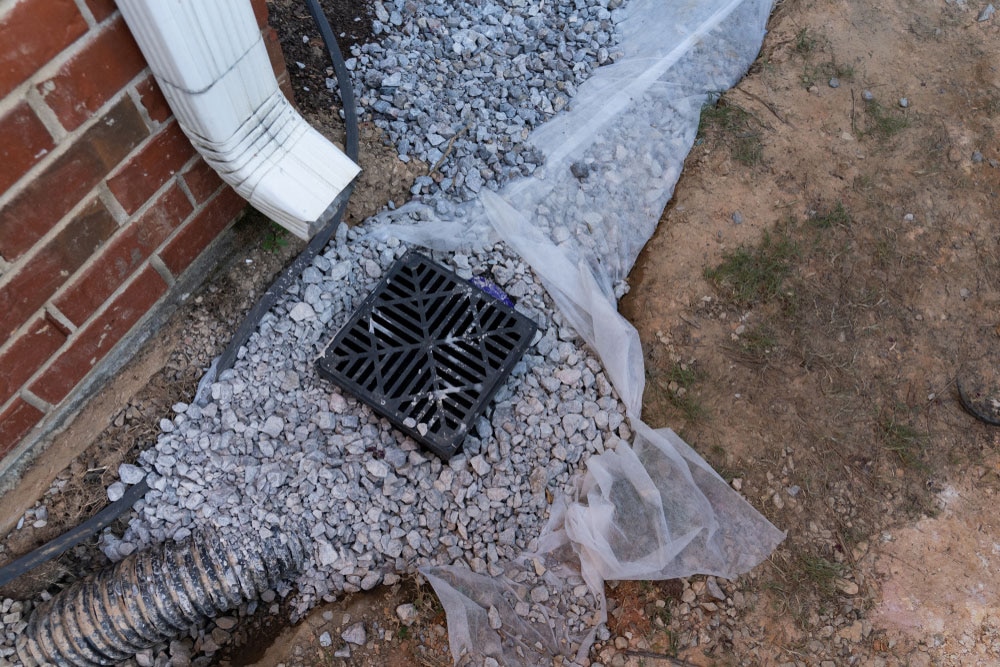
A downspout can be flowing exactly as it should and still leave roof runoff in the wrong place. When it empties beside the house, stops short in a planting bed, or leaves water collecting near the foundation, Crawl Space Ninja can extend that drainage route and give the runoff a better place to go. Technicians evaluate where the water currently lands, how the property is graded, and what stands between the downspout and a practical discharge point.
Crawl Space Ninja provides downspout extension services across Delaware, including Wilmington, Newark, Dover, Rehoboth Beach, and surrounding communities. From straightforward above-ground extensions to buried drainage lines that keep piping out of walkways, gates, and mowing paths, the service is built around moving concentrated roof runoff farther from the house without simply creating another wet spot elsewhere on the property.
The Downspout Is Only the Handoff Point
Gutters collect rain from the roof and funnel it toward a handful of downspouts. Once that water reaches the bottom elbow, however, it still needs a useful route away from the house. That’s where a downspout extension becomes part of the drainage system rather than just an accessory attached to the gutter.
Technicians can look at where the downspout currently empties, how the yard is graded, and what stands between that point and a practical place to release the water. A straight route may be interrupted by a sidewalk, driveway, planting bed, fence, patio, or gate. The extension has to move the runoff without becoming something the homeowner is constantly stepping over, mowing around, or disconnecting.
That can be particularly noticeable on compact Wilmington properties. Around Forty Acres, Trolley Square, and the Delaware Avenue corridor, established housing and tighter lots can leave less room between a downspout and neighboring pavement, structures, or everyday walking areas. In those settings, getting runoff away from the foundation can require more thought than snapping another short length of pipe onto the downspout.
Downspout Extensions Carry Roof Water Farther From the House
The primary purpose of an extension is straightforward: move concentrated roof runoff away from the foundation. The actual service requires choosing a route and discharge point that accomplish that without creating another drainage problem elsewhere in the yard.
A downspout extension evaluation can consider:
- Existing downspout locations: Each downspout handles runoff from a particular portion of the roof.
- Current discharge: Technicians can see where water is being released now and whether it remains too close to the house.
- Property grade: The route should help water continue away instead of allowing it to turn back toward the foundation.
- Everyday access: Gates, walkways, mower paths, driveways, and patios can influence the extension route.
- Landscaping: Beds, edging, shrubs, and other features may need to be worked around.
- Final discharge: The extension needs a practical location where the roof water can leave the system.
On an established Newark property off New London Road, the most direct path away from a downspout may already contain a driveway, rear patio, fence line, or landscaping. Around Cleveland Avenue, Ray Street, Creek Road, and neighborhoods extending away from Main Street, technicians may have to find a route that moves the runoff without putting exposed pipe directly through an area the homeowner uses every day.
Existing Extensions Don’t Always Finish the Job
Finding a downspout extension already attached doesn’t necessarily mean roof runoff is being handled well. Extensions get moved for mowing, kicked loose, crushed, shortened, or disconnected. Splash blocks can shift, and corrugated extensions sometimes end up pointing toward a low spot that leaves water sitting only a short distance from where it started.
These are the details technicians can catch while walking the property. A pipe may look long enough until its discharge point is found buried in mulch beside a shrub. Another may stretch several feet from the house but end where the yard slopes back toward the foundation. The important question isn’t simply whether an extension exists. It’s where the water goes after reaching the end.
Dover properties provide plenty of examples of why the individual yard matters. Around Silver Lake, a home may have open lawn but still have a downspout emptying into a low planting bed beside the foundation. Farther toward the Route 13 corridor, fencing, patios, landscaping, or backyard traffic routes can create a completely different set of obstacles between the house and a useful discharge point.
Correcting an existing extension can mean changing its route, replacing a damaged section, improving the connection at the downspout, or carrying the runoff farther before releasing it. The service stays focused on what the extension actually accomplishes instead of whether a piece of pipe happens to be present.
Buried Downspout Extensions Keep the Route Out of the Way
An exposed extension can work well when there is a clear path across an unused portion of the yard. It becomes less practical when the best route crosses an area the homeowner uses regularly.
A buried extension allows roof runoff to travel beneath part of the property before reaching its discharge point. That can keep piping out of mower paths, gates, walkways, and other places where an above-ground extension would continually be moved, stepped on, or damaged. The homeowner gets the drainage function without having a loose pipe stretched across an active portion of the yard.
Buried downspout extension service can involve:
- Downspout connections: Roof runoff needs to enter the drainage line instead of spilling beside the foundation.
- Route planning: The line can be positioned around patios, landscaping, fencing, and other property features.
- Buried drainage pipe: Runoff can travel beneath areas where exposed piping would be inconvenient.
- Practical discharge points: The line needs to end where water can leave the system and continue away from the house.
- Existing line evaluation: Older buried extensions can be checked when they no longer appear to move water as expected.
The benefit is easy to understand from a homeowner’s perspective. If an extension has to be picked up before mowing, gets crushed when the trash cans come through the gate, or runs across the walkway to the backyard, moving that drainage route underground can make the system much easier to live with.
Every Delaware Property Gives Roof Water a Different Route
Delaware may be a small state, but the properties encountered between Wilmington and Rehoboth Beach can look remarkably different. Those differences become important when technicians need to find a practical path for concentrated roof runoff.
In Wilmington’s Forty Acres or around Delaware Avenue, compact lots and established housing can leave narrow spaces between a downspout and neighboring pavement or structures. Newark neighborhoods around New London Road and Cleveland Avenue may offer more yard space, but patios, fencing, additions, and established landscaping can still occupy the most direct drainage route.
In Dover, properties around Silver Lake may provide open lawn while still having low beds, walkways, or everyday traffic areas that shouldn’t become the downspout’s discharge point. Farther south, Rehoboth Beach introduces another property layout altogether. Around Rehoboth Avenue, Silver Lake, the Lewes-Rehoboth Canal, and the Route 1 corridor, walkways, landscaping, outdoor living spaces, and tighter lots can influence where an extension can reasonably travel.
None of those landmarks determines the drainage solution. They help illustrate why statewide Delaware service still requires technicians to work with the individual property. The downspout extension needs to make sense for the house, grade, yard, and way the homeowner actually uses the space.
Downspout Extensions and Property Drainage Have Different Jobs
Downspout extensions address one specific source of water: runoff collected from the roof. They aren’t automatically a solution for every low spot, soggy section of lawn, crawl space water problem, or foundation drainage concern.
That distinction becomes important when several water issues exist on the same property. A Wilmington homeowner may have a downspout emptying beside the foundation and a separate low area holding water near the back fence. Moving the roof runoff can correct the first problem without pretending it will automatically dry the second.
The same applies in Newark, Dover, and Rehoboth Beach. Technicians can determine whether unwanted water is coming from the roof or whether a broader property drainage issue needs separate attention. Downspout extension service stays focused on controlling concentrated roof runoff and carrying it away from the house.
Delaware Downspout Extension Services
Crawl Space Ninja provides downspout extension services across Delaware, including Wilmington, Newark, Dover, Rehoboth Beach, and surrounding communities. Whether the existing downspout stops at a splash block, an extension keeps getting moved for mowing, or the current pipe empties into another low area, technicians can evaluate where that roof water is going and provide a more effective route.
That route may be a straightforward above-ground extension or a buried drainage line that carries runoff beneath an actively used portion of the property. The important part is what happens at the other end. Roof runoff needs to leave the extension in a location that makes sense for the grade, landscaping, access, and everyday use of the yard.
From the compact properties around Wilmington’s Forty Acres to Newark’s established New London Road area, Dover homes around Silver Lake, and the coastal setting around Rehoboth Avenue, the details change from one Delaware property to the next. The service remains focused on one practical result: getting concentrated roof runoff farther from the foundation without simply moving the problem somewhere else. If your downspouts empty beside the house, your existing extensions stop too soon, or exposed piping is constantly in the way, contact Crawl Space Ninja online to schedule an evaluation for downspout extension services in Delaware.


Why Choose Our Services?
Crawl Space Ninja Eliminates the Guesswork.

Every decision we make on your job starts with one question: what's actually best for your home and your family.

We stand behind every job with our lifetime warranty, because giving you lasting protection and confidence in your investment.

Our technicians are trained and certified on the system we built and refined ourselves, not a one-size-fits-all fix.

From your first call to the final walkthrough, you’ll stay updated through every step of the process.

Consult, customize, commence. Every job starts with a plan built for your home, not a generic fix.

You'll know the full cost before work begins. No hidden fees, no surprises.