French Drain Pipe in Delaware
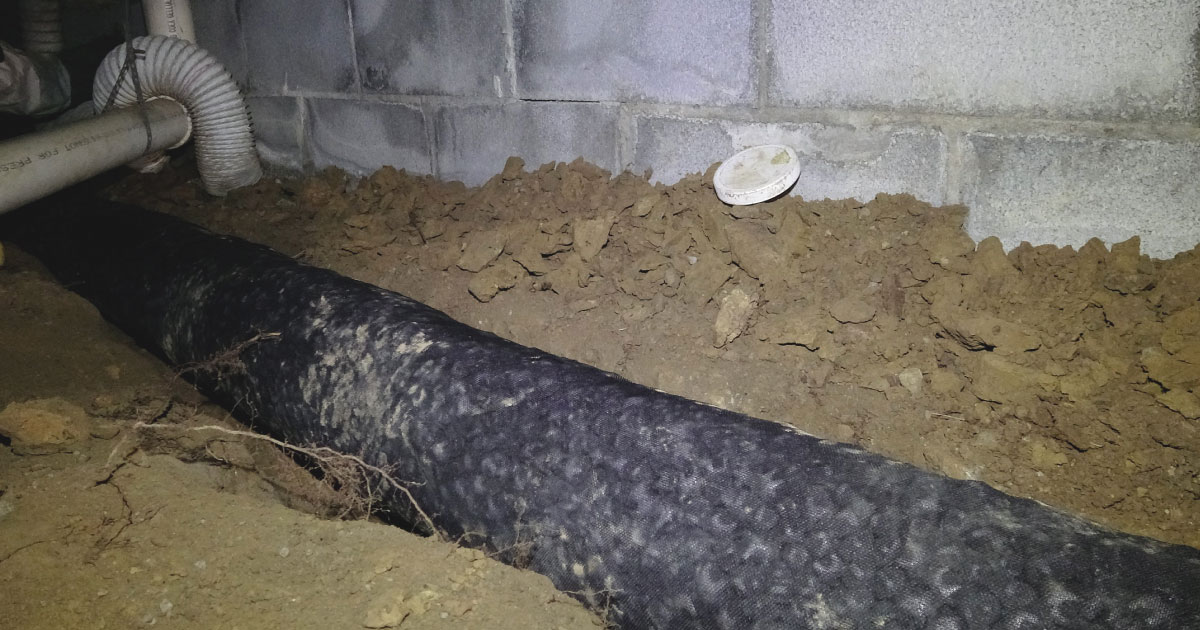
Most homeowners never see a French drain doing its job. Once the work is complete, the important part is below the surface: a gravel-filled drainage channel and perforated pipe positioned where groundwater can reach it. Rain can come and go while the system quietly relieves an area that used to stay wet.
Crawl Space Ninja installs French drain pipe for homeowners across Delaware, including Wilmington, Newark, Dover, Rehoboth Beach, and surrounding communities. This type of drainage can be useful along a chronically wet side yard, beside a foundation, across a troublesome section of lawn, or anywhere subsurface water needs to be intercepted before it creates a recurring problem.
Think of a French Drain as an Underground Interception Line
French drains aren’t designed to chase water after it reaches the lowest point in the yard. Their advantage is being positioned where moisture traveling through the soil can enter a more efficient drainage path.
Perforated pipe sits within a bed of drainage stone. Water entering that stone-filled channel can reach openings in the pipe and travel through the line. Instead of relying entirely on the surrounding soil to absorb and disperse moisture, the French drain provides additional drainage capacity beneath the surface.
Location is a major part of the service. Two trenches only several feet apart could perform very differently if one intersects the troublesome water and the other doesn’t. Crawl Space Ninja technicians evaluate the wet portion of the property and surrounding terrain to determine where French drain pipe can provide the most benefit.

French Drain Pipe Is More Than Buried Pipe
The perforated pipe gets most of the attention, but putting perforated pipe into the ground by itself doesn’t create an effective French drain. Water has to reach the line, enter it, continue through it, and ultimately leave the system.
A professionally planned French drain brings several functions together:
- Interception: The drain is positioned where subsurface moisture can reach it.
- Stone drainage zone: Drainage material provides space for water to travel toward the pipe.
- Perforated pipe: Openings allow water to enter along the drainage line.
- Continuous flow: The pipe carries incoming water beyond the troublesome section.
- Outlet planning: Collected water needs a suitable endpoint instead of terminating beneath the lawn.
The outlet also has to work with the existing property. Fences, patios, driveways, sheds, landscaping, and neighboring lots can influence where the line can travel. The most direct route isn’t necessarily the one that provides the best combination of drainage and everyday usability.
Newark Properties Can Put Underground Drainage to the Test
Newark has its own history with stormwater. Creek Road and Paper Mill Road are among locations the city has identified in connection with drainage and flooding concerns, making runoff a familiar issue in portions of the community.
Residential French drain work happens on a much smaller scale. Around New London Road or neighborhoods extending away from Main Street, technicians may encounter homes surrounded by established beds, mature trees, fencing, additions, or decades of changes to the yard. Those features can leave a particular section where moisture consistently passes through the soil.
French drain pipe can target that underground moisture without requiring the entire yard to become a drainage project. Once installed and covered, the line continues working below grade while the surface above remains available for normal use.
French Drain Pipe Isn’t the Answer to Every Wet Spot
Several drainage systems can deal with unwanted water, but they don’t all perform the same job. Knowing the difference helps keep French drain pipe focused on the conditions it is designed to address.
A catch basin receives water collecting at the surface. A downspout line handles runoff delivered from the roof. French drain pipe is useful when moisture needs to enter a drainage system through the surrounding ground along a larger section of the property.
Dover offers a good example of why the distinction matters. Silver Lake and the St. Jones River are prominent parts of the city’s larger drainage landscape, but a homeowner may have a much smaller problem, such as one band of damp soil that remains soft while another area develops a visible puddle. Those symptoms don’t automatically call for the same drainage component.
When several water sources affect the property, French drain pipe can also be one part of a broader drainage solution. The important point is giving each component a specific job rather than expecting one underground line to handle every form of runoff.
French Drains Have to Fit the Property
The amount of available space changes considerably as you move across Delaware. That can influence how a French drain is incorporated into an existing property.
A Dover home may offer a broad lawn but still have subtle elevation changes that affect where an underground drainage line can travel. A larger yard can also contain patios, fences, planting beds, sheds, and other obstacles that need to be considered before determining the route to an outlet.
Rehoboth Beach creates a different setting. Around Rehoboth Avenue and Silver Lake, properties can be compact, while development toward Route 1 introduces a wider variety of lot configurations. Walkways, landscaped beds, patios, outdoor showers, fences, and other exterior features can occupy much of the available ground.
A French drain can work beneath the surface without permanently consuming the space above it, which can be valuable where much of the property already has a purpose. The system still has to fit the existing layout while intercepting the moisture it was installed to address.
French Drain Pipe Services Throughout Delaware
From compact Wilmington properties around Forty Acres to established Newark neighborhoods near New London Road, the physical setting changes quickly across northern Delaware. Continue toward Dover and Rehoboth Beach, and lot layouts, development patterns, and available yard space change again. Crawl Space Ninja provides French drain pipe and drainage services across Delaware, including these communities and surrounding areas.
French drain pipe fills a specific role within exterior drainage. It creates an underground interception line for moisture moving through the soil, allowing that water to enter perforated pipe and travel beyond the troublesome area. When the system is properly suited to the problem, the benefit shows above ground through an area that no longer remains chronically wet after the rest of the property has recovered.
If part of your Delaware property remains persistently wet and you’re wondering whether underground drainage could help, contact Crawl Space Ninja online to schedule an evaluation for French drain pipe service.


Why Choose Our Services?
Crawl Space Ninja Eliminates the Guesswork.

Every decision we make on your job starts with one question: what's actually best for your home and your family.

We stand behind every job with our lifetime warranty, because giving you lasting protection and confidence in your investment.

Our technicians are trained and certified on the system we built and refined ourselves, not a one-size-fits-all fix.

From your first call to the final walkthrough, you’ll stay updated through every step of the process.

Consult, customize, commence. Every job starts with a plan built for your home, not a generic fix.

You'll know the full cost before work begins. No hidden fees, no surprises.