Basement Dehumidifiers in Myrtle Beach, SC
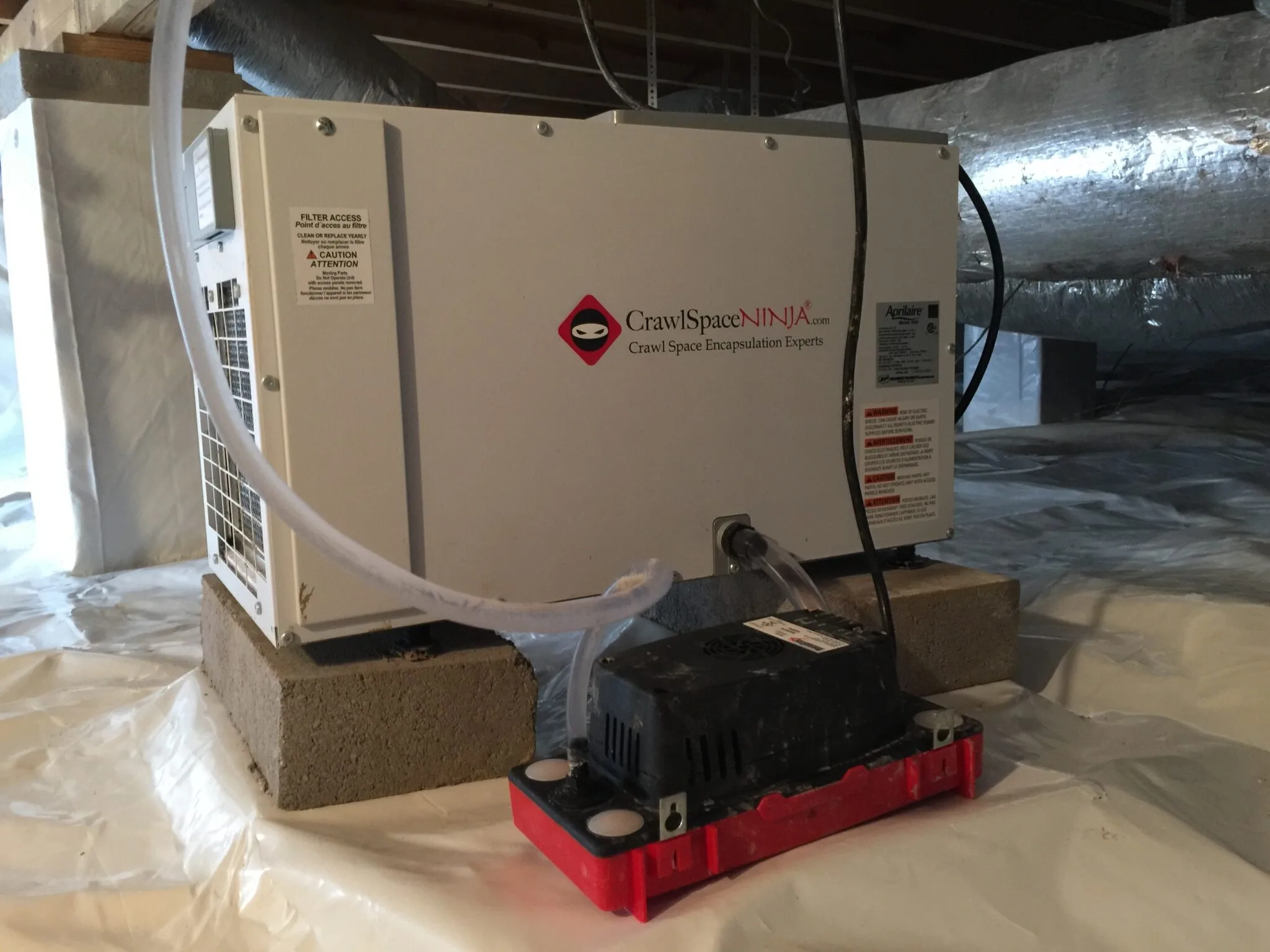
A basement can feel damp without having water standing on the floor. On a muggy Myrtle Beach day, the lower level may feel heavier than the rooms upstairs, develop a musty odor, or stay humid around storage and mechanical areas. When excess moisture is in the air, a properly installed dehumidifier provides active humidity control instead of relying on the home’s HVAC system to handle the problem.
Crawl Space Ninja provides professional dehumidifier installation for moisture control in below-floor spaces. The service involves more than finding an electrical outlet and setting a machine against the wall. Humidity needs to be evaluated, equipment properly sized and positioned, airflow considered, condensate routed away, and the finished system tested to make sure it serves the entire space.
Start With the Basement, Not the Dehumidifier
Before recommending equipment, humidity conditions need to be checked throughout the basement. A reading beside the stairs doesn’t necessarily tell the whole story when a mechanical room, storage area, or finished room sits farther away. Walls, doors, HVAC equipment, and shelving can all affect how humid air moves through the lower level.
This becomes especially important during long stretches of humid Grand Strand weather. A basement near Kings Highway may have a completely different layout and moisture problem from one farther inland toward US 501, so the recommendation starts with conditions inside the house rather than its location on the map. Humidity readings, physical observations, and the layout help determine what equipment and installation approach make sense.

Size and Position the Dehumidifier for the Space
Square footage matters when selecting a basement dehumidifier, but it isn’t the only consideration. Existing humidity, room divisions, airflow restrictions, and the amount of space being treated can all affect equipment selection. An open unfinished basement presents a different job from a finished lower level divided into several rooms.
Once the equipment has been selected, placement becomes just as important. A unit pushed between shelving and HVAC equipment may save floor space while restricting the intake, discharge, or future service access. The installation location also needs to account for how collected water will leave the equipment.
Several details come together during installation:
- Equipment placement: Position the unit where it can effectively serve the basement.
- Airflow: Keep the intake and discharge clear of walls, shelving, and stored belongings.
- Electrical requirements: Provide the appropriate connection for the equipment.
- Service access: Leave filters, controls, and important components reachable.
- Condensate removal: Establish a dependable route for the water removed from the air.
These details turn the dehumidifier from a stand-alone appliance into part of a planned humidity-control system. They also help keep the equipment usable after shelving, totes, tools, and beach gear start finding their way back into the basement.
The Moisture Removed From the Air Has to Go Somewhere
Every pint of moisture a dehumidifier removes eventually becomes liquid water. Before the equipment is permanently positioned, the condensate route needs to be planned along with the airflow. When an appropriate drain is available, gravity may provide the simplest route; when it isn’t, a condensate pump may be incorporated into the installation.
This can change where the equipment belongs. A basement around Pine Lakes Drive may offer plenty of open space for a unit while presenting a less convenient condensate route, while a home farther south near Farrow Parkway and Market Common may have a completely different mechanical layout. The best installation balances both sides of the service: humid air needs to reach the dehumidifier, and the water removed from that air needs a dependable way out.
Ducted Options Can Help With Divided Basements
Some basement layouts make simple freestanding placement less effective. A finished room behind a closed door may not exchange air well with equipment installed beside the HVAC system, even when the dehumidifier itself has plenty of capacity. Storage rooms, workshops, stairs, and other divisions can create similar airflow challenges.
When appropriate, ducting can help the dehumidification system serve areas that don’t naturally communicate well with the equipment location. It can also allow the unit to remain in a mechanical or less frequently used area while still helping control humidity elsewhere. The decision depends on how the basement is divided and whether air can realistically move between those areas.
Don’t Ask a Dehumidifier to Handle Basement Water
Professional dehumidifier service also means recognizing when humidity isn’t the only problem. After several days of heavy Myrtle Beach rain, a basement may simply have elevated humidity, or it may show evidence that liquid water is actually getting inside. Those are different conditions and shouldn’t automatically receive the same solution.
During an inspection, several signs can indicate that the problem extends beyond airborne humidity:
- Water marks: Staining can show where liquid water has previously reached.
- Wet floor joints: Dampness where the wall and floor meet deserves closer attention.
- Mineral deposits: Residue on masonry can provide evidence of recurring moisture movement.
- Visible seepage: Active water entering the basement needs separate evaluation.
- Standing water: A dehumidifier isn’t a substitute for appropriate water management.
A basement can also have both problems at once. Water intrusion may need to be addressed while dehumidification controls moisture remaining in the air. Keeping those services separate prevents a dehumidifier from being expected to solve a problem it wasn’t designed to handle.
Test the Entire System, Not Just the Machine
Installation isn’t complete simply because the dehumidifier turns on. The humidity controls need to be configured, airflow checked, and the condensate route tested to make sure collected water is leaving properly. When a condensate pump is part of the installation, its operation should also be verified before the job is finished.
The basement beyond the equipment deserves attention too. Humidity can be checked farther from the unit, particularly across stairs, doors, or walls that could restrict circulation. If conditions improve beside the mechanical room but remain elevated elsewhere, the airflow or system configuration may need another look.
Basement Dehumidifier Installation in Myrtle Beach, SC
Crawl Space Ninja provides professional dehumidification solutions for Myrtle Beach homeowners dealing with excessive moisture in below-floor spaces. Service can include humidity evaluation, equipment sizing and placement, dehumidifier installation, condensate management, ducting when appropriate, system setup, and operational testing.
From established homes around Pine Lakes and Kings Highway to properties along the US 501 corridor and farther south near Farrow Parkway and Market Common, lower-level layouts and moisture conditions can vary considerably. If your Myrtle Beach basement feels damp, smells musty, or struggles with elevated humidity, contact Crawl Space Ninja online to schedule an inspection and determine which dehumidification solution fits your home.


Why Choose Our Services?
Crawl Space Ninja Eliminates the Guesswork.

Every decision we make on your job starts with one question: what's actually best for your home and your family.

We stand behind every job with our lifetime warranty, because giving you lasting protection and confidence in your investment.

Our technicians are trained and certified on the system we built and refined ourselves, not a one-size-fits-all fix.

From your first call to the final walkthrough, you’ll stay updated through every step of the process.

Consult, customize, commence. Every job starts with a plan built for your home, not a generic fix.

You'll know the full cost before work begins. No hidden fees, no surprises.