Alpharetta, GA Basement Dehumidifiers
Walk downstairs and the basement floor is dry. There are no puddles around the walls or water running across the concrete, but the air feels different. Maybe there’s a musty smell, cardboard boxes feel softer than they should, or the basement simply feels damp compared with the rest of the house.
That’s where humidity deserves a closer look. Alpharetta’s warm, humid weather can make below-grade moisture control important even without standing water. Crawl Space Ninja installs Basement Dehumidifiers to help manage excess moisture and create a drier basement environment. Contact us online to schedule an inspection.
Basement Moisture Across Alpharetta
Drive from the older streets around Downtown Alpharetta toward Old Milton Parkway and GA-400, and the city changes quickly. Main Street and Milton Avenue put you in the historic heart of Alpharetta, while Wills Road passes one of the city’s longtime gathering places at Wills Park. Farther east, Avalon and the development around GA-400 show a newer side of the city.
The basements we walk into can be just as varied. An established home around Wills Road may give us a different layout from a newer property elsewhere in Alpharetta, but age doesn’t tell us whether either one needs a dehumidifier. We need to know how humid the basement is, where the moisture is coming from, and whether we’re dealing with moisture in the air or another water problem.

A Dry Floor Doesn’t Mean Dry Air
Homeowners often associate basement moisture with water they can see, but humidity doesn’t work that way. We may notice condensation on a cool duct even though the foundation walls look dry. A cardboard box against one wall may feel soft along the bottom while another across the room feels completely normal.
Some signs of excess basement humidity can be easy to overlook:
- Musty odors: The basement smells different from the rooms upstairs.
- Clammy air: The space feels damp even though nothing looks wet.
- Condensation: Cooler pipes, ductwork, or other surfaces collect moisture.
- Damp belongings: Boxes, fabrics, or stored items begin absorbing moisture.
- Visible growth: Organic materials may develop signs of mold or mildew.
- Rust or corrosion: Metal items downstairs begin showing moisture damage.
These differences give us reasons to start measuring rather than relying only on what we can see. A Basement Dehumidifier actively removes excess moisture from the air, but first we want to know whether humidity is actually the problem we’re trying to solve.
Why Isn’t the Air Conditioner Enough?
It’s reasonable to wonder why a basement needs its own dehumidifier when the air conditioner already removes moisture. The answer often comes down to how differently the basement behaves from the living areas above it. On a warm Alpharetta afternoon, the upstairs may need plenty of cooling while the naturally cooler basement creates less demand for the HVAC system.
A basement can therefore feel comfortably cool and still contain too much moisture. Basement Dehumidifiers respond to humidity instead of waiting for the rest of the house to call for cooling. That allows moisture removal to continue when conditions downstairs require it.
What Happens to the Water a Dehumidifier Removes?
A dehumidifier removes water from the air through condensation, and that water needs somewhere to go. On a properly planned system, you shouldn’t have to walk downstairs every evening, pick up a full bucket, and carry it to a sink.
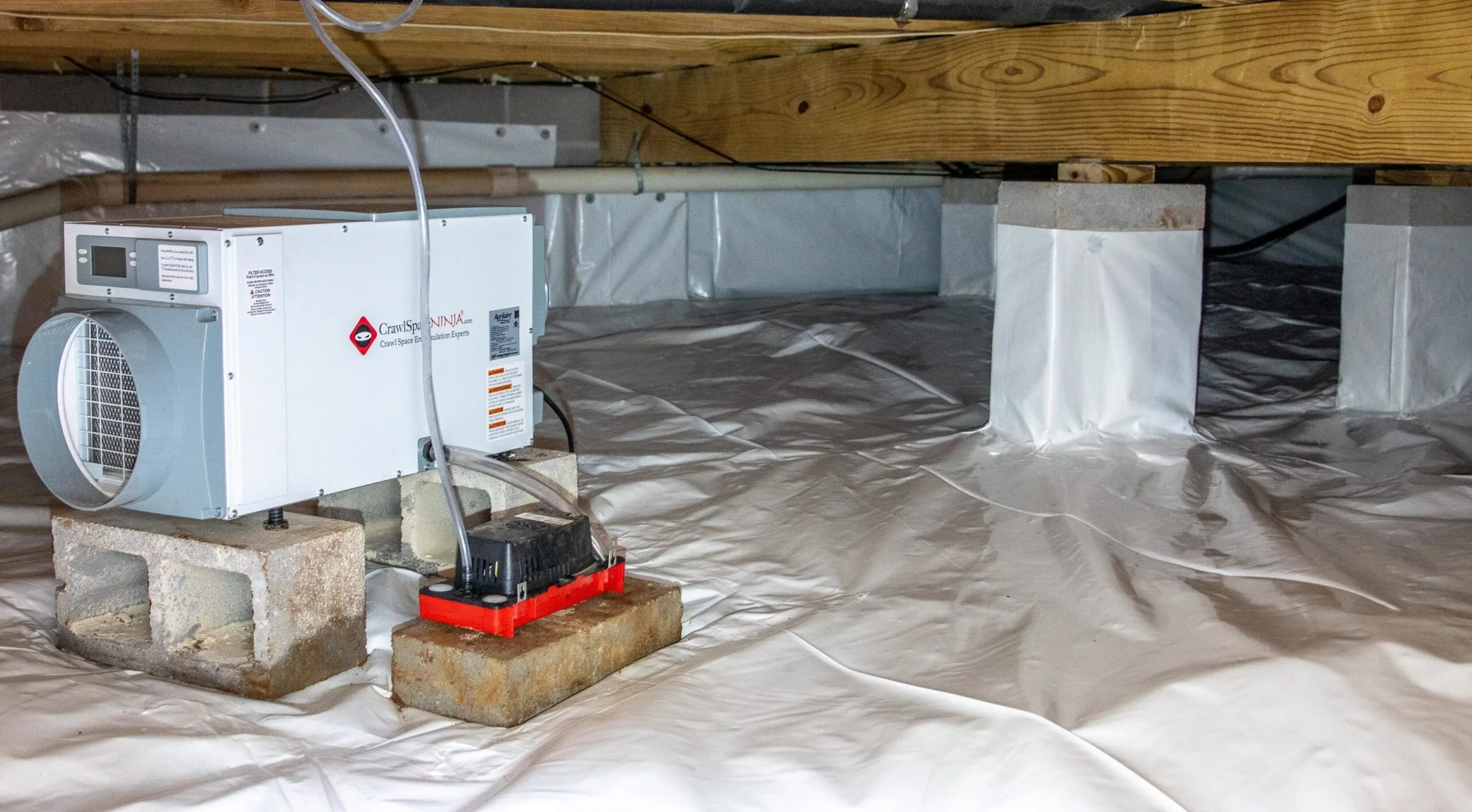
A permanent installation provides a reliable way for condensate to leave the unit automatically. Depending on the basement, water may be directed to an appropriate drain or another suitable drainage setup. We also consider airflow, equipment placement, and access for future maintenance rather than simply setting a portable unit in an open corner.
Summer Can Show You What Winter Didn’t
A basement that seemed normal during cooler weather can behave differently once an Alpharetta summer settles in. North Georgia commonly experiences extended periods of warm, humid weather, and that additional moisture can make an existing humidity problem easier to notice. The basement may remain comfortably cool while moisture levels rise.
We may find condensation on cooler surfaces, stored belongings developing a musty smell, or air that feels clammy compared with the rooms upstairs. These changes are why we prefer actual humidity measurements over judging conditions during a quick walk-through. Those readings help us determine whether active moisture control is needed.
The Right Dehumidifier Has to Fit the Basement
Buying the largest dehumidifier available doesn’t automatically mean better moisture control. The equipment needs to match the space, and the installation has to account for airflow. A finished lower level with several rooms presents different challenges from an open unfinished basement.
Several factors help us evaluate the setup:
- Basement size: The system needs enough capacity for the area it serves.
- Moisture load: Seasonal humidity differs from persistent damp conditions.
- Air movement: Humid air needs to reach the unit so drier air can circulate.
- Drainage: Condensate needs a reliable place to go.
- Maintenance access: Equipment needs to remain accessible for service.
- Other moisture problems: Active water intrusion may require separate attention.
This is where evaluating the actual basement matters. A house closer to Downtown Alpharetta may have a layout completely different from a property beyond Old Milton Parkway. The system needs to make sense for the rooms, airflow, moisture levels, and drainage options downstairs.
A Dehumidifier Can’t Stop Water From Coming In
Basement humidity and water intrusion can exist together, but they’re not the same problem. If water enters around a foundation wall, collects on the floor, or repeatedly appears after heavy rain, a dehumidifier may remove moisture from the air without addressing how the water got inside.
That’s why we look around before deciding what the basement needs. Dampness concentrated along one wall, staining from previous water intrusion, or water appearing after storms can point toward a different issue than elevated humidity throughout the space. Separating those problems helps us recommend moisture control that addresses what’s actually happening.
Basement Dehumidifiers for Alpharetta Homes
A basement doesn’t have to look wet to be holding too much moisture. The first warning may be the smell when you walk downstairs, condensation on a cool surface, cardboard beginning to soften, or a basement that feels noticeably different from the rooms above it. Those are reasons to find out what the humidity level actually is instead of waiting for a puddle to appear.
If your Alpharetta basement feels damp, smells musty, or shows other signs of excess humidity, contact Crawl Space Ninja online to schedule an inspection. We’ll evaluate the conditions downstairs, determine whether a Basement Dehumidifier makes sense for the space, and plan a system around the basement you actually have.


Why Choose Our Services?
Crawl Space Ninja Eliminates the Guesswork.

Every decision we make on your job starts with one question: what's actually best for your home and your family.

We stand behind every job with our lifetime warranty, because giving you lasting protection and confidence in your investment.

Our technicians are trained and certified on the system we built and refined ourselves, not a one-size-fits-all fix.

From your first call to the final walkthrough, you’ll stay updated through every step of the process.

Consult, customize, commence. Every job starts with a plan built for your home, not a generic fix.

You'll know the full cost before work begins. No hidden fees, no surprises.