Alpharetta, GA Bowing Basement Walls
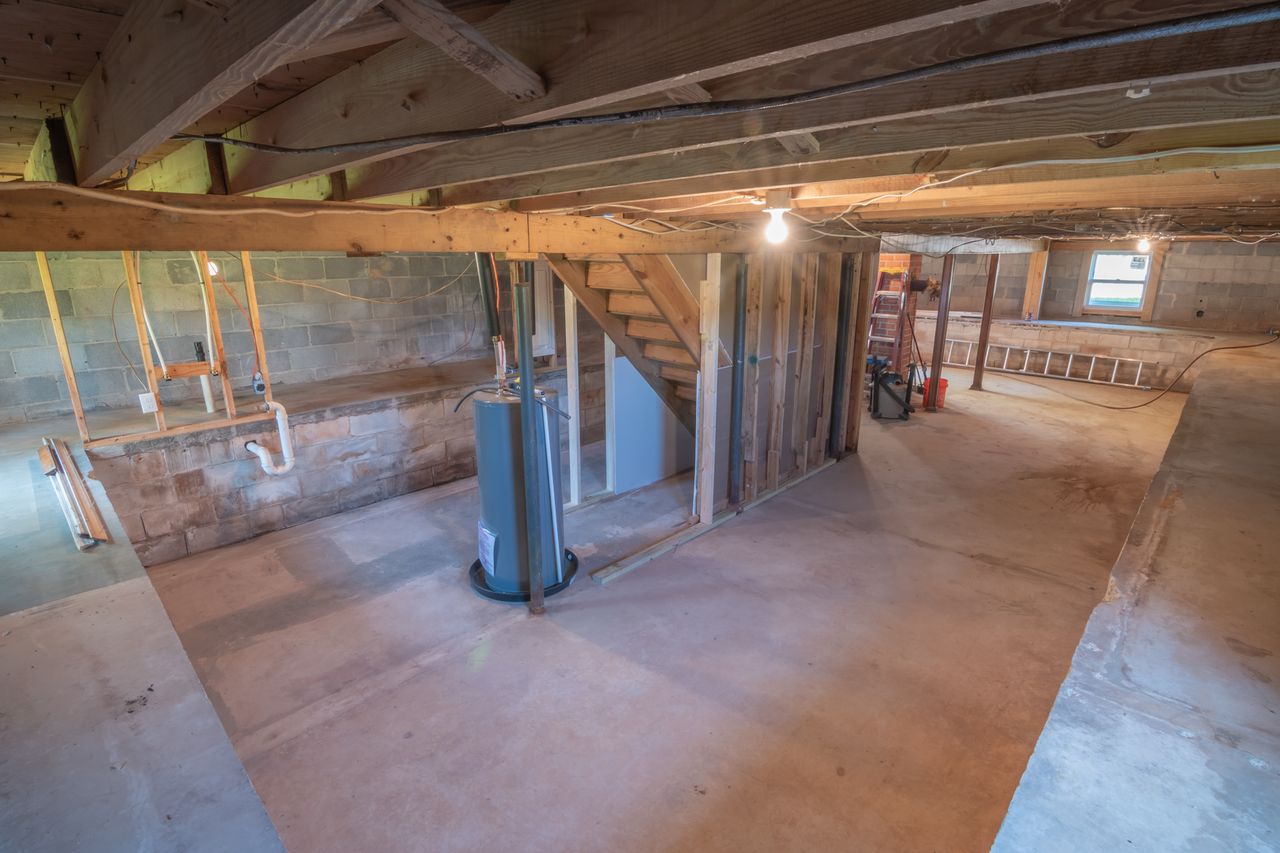
Most homeowners don’t head downstairs planning to inspect the basement walls. You may be carrying a laundry basket, pulling holiday decorations out of storage, or reaching behind a shelf when something catches your eye. A crack looks longer than you remember, the shelving doesn’t sit against the wall like it used to, or the middle of a block wall seems slightly farther into the room than the corners.
Those changes are worth a closer look. When Crawl Space Ninja inspects Bowing Basement Walls in Alpharetta, we’re interested in where the movement is occurring, how the wall has changed, and what conditions exist on the other side. A wall doesn’t have to look dramatic before there’s something worth investigating.
Alpharetta Isn’t Built on Flat Ground
Alpharetta sits in Georgia’s Piedmont, where rolling terrain and fine-textured soils are common. You can see those elevation changes moving from the older streets around Downtown and Milton Avenue toward Wills Park, Old Milton Parkway, and residential areas beyond GA-400. Individual lots can look very different even within the same part of town.
Once a basement wall shows signs of movement, we want to see how that particular house sits on its property, what’s happening immediately outside the affected wall, and how water moves around the home. A house on an established lot around Wills Road can present different conditions from another property across town, so the inspection stays focused on the wall and property in front of us.

What Does a Bowing Basement Wall Look Like?
Bowing doesn’t always announce itself with a huge crack. Sometimes the first clue is something that simply doesn’t look straight anymore. Stand back several feet and look across the wall rather than focusing only on one crack. The middle may appear pushed farther into the basement while the wall becomes straighter toward the corners.
Other changes can help us decide where to look next:
- Horizontal cracking: A crack runs across an area that appears pushed inward.
- Inward curvature: The center no longer lines up with the top, bottom, or corners.
- Stair-step cracks: Cracking follows mortar joints through a block wall.
- Reopened patches: A previously repaired crack has separated again.
- Changes at corners: Cracking or movement appears where two walls meet.
- Water staining: Moisture marks appear near a section showing movement.
Sometimes the easiest reference point isn’t the wall itself. A storage rack that once sat flush may now have a gap behind it, or an old paint line can make a change easier to notice. Those small details give us a reason to inspect the entire section instead of concentrating only on the most obvious crack.
The Other Side of the Wall Matters
From inside the basement, you’re looking at block or concrete. Walk outside and that same wall may have several feet of soil against it. Thinking about both sides helps explain why an inspection doesn’t end with measuring a crack.
Soil conditions can change as moisture levels change, and water around the property can affect the soil immediately beside the basement. Alpharetta’s Piedmont setting provides useful context, but it doesn’t mean every home around Main Street, Wills Road, or Old Milton Parkway experiences identical conditions.
That’s why we locate the affected basement wall outside. We look at how the ground meets that section of the house, whether drainage deserves attention, and whether anything outside corresponds with what we’re seeing downstairs.
A Crack Is More Than Something to Cover Up
It’s tempting to look at a basement crack as a cosmetic problem. Patch it, paint over it, and the wall looks better. The problem is that fresh paint doesn’t tell us whether the wall behind it has stopped moving.
The pattern matters. A thin vertical crack doesn’t necessarily give us the same information as a long horizontal crack through the middle of a block wall. Stair-step cracking follows another path, while a horizontal crack paired with visible inward curvature gives us more to investigate.
We also look beyond the crack. If the wall appears straight near the corners but pushed inward near the center, that’s important. The crack gives us a starting point, but the shape of the wall adds context.
Water and Wall Movement Aren’t the Same Problem
Water staining sometimes appears on a wall that’s also cracked or bowed, but that doesn’t mean moisture and movement are automatically the same issue. We may see staining along one portion of the wall while the most noticeable inward movement occurs somewhere else.
That’s another reason we inspect rather than assume. We look at where the wall has moved, where moisture has appeared, and what’s happening outside that section of the basement. If another condition needs separate attention, a bowing-wall service shouldn’t be presented as a cure for every basement problem.
Bowing Wall Repair Starts With the Wall in Front of Us
Not every basement crack means a wall is bowing, and bowing walls don’t all move the same way. The amount and location of movement, crack pattern, wall construction, and surrounding conditions can affect what happens next.
That’s why we don’t begin with a predetermined repair recommendation. The first step is inspecting the affected section and determining what the wall is doing. Any corrective approach offered by the local Crawl Space Ninja franchise should match the condition identified during that inspection.
A crack in one section doesn’t automatically tell us what the rest of the basement is doing. We keep the evaluation focused on the wall condition we’re there to examine rather than making the problem sound larger than the evidence supports.
Have That Alpharetta Basement Wall Checked
Maybe you noticed the crack while pulling boxes away from the wall. Maybe light through a basement window made the curve easier to see, or an old patch simply doesn’t look the way you remember it. However you found it, a basement wall that appears to be changing deserves a closer look.
If a basement wall in your Alpharetta home appears bowed, cracked, or pushed inward, contact Crawl Space Ninja online to schedule an inspection. We’ll examine the affected section, look at how the wall has moved, check the surrounding conditions, and determine the appropriate next step.


Why Choose Our Services?
Crawl Space Ninja Eliminates the Guesswork.

Every decision we make on your job starts with one question: what's actually best for your home and your family.

We stand behind every job with our lifetime warranty, because giving you lasting protection and confidence in your investment.

Our technicians are trained and certified on the system we built and refined ourselves, not a one-size-fits-all fix.

From your first call to the final walkthrough, you’ll stay updated through every step of the process.

Consult, customize, commence. Every job starts with a plan built for your home, not a generic fix.

You'll know the full cost before work begins. No hidden fees, no surprises.