Basement Dehumidifiers in Wilmington
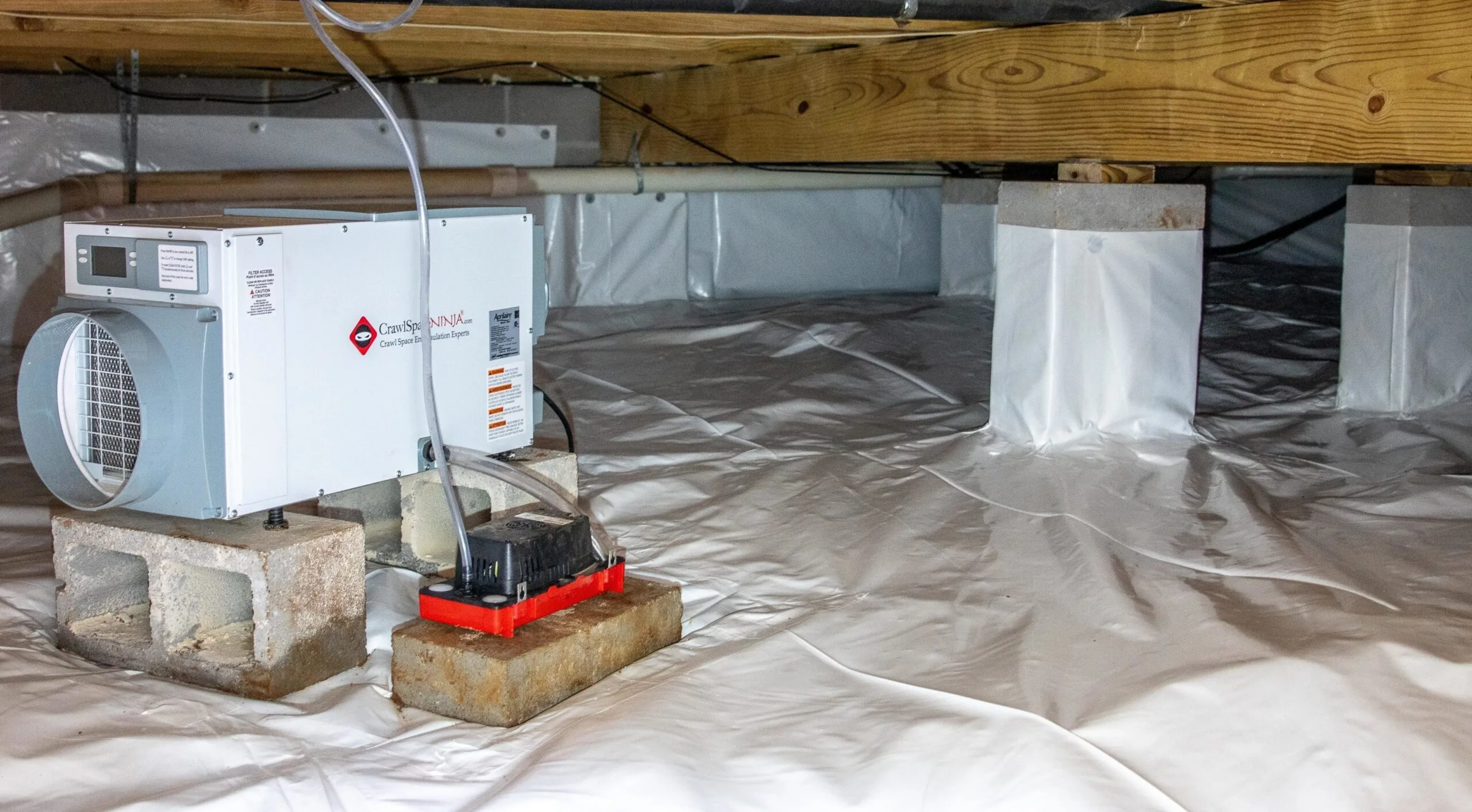
Step out of a hot Wilmington afternoon and walk down into a basement, and that first wave of cooler air can feel pretty good. Nothing about it immediately screams moisture problem. Then we pick up a cardboard storage box and the bottom feels softer than the sides, or run a hand across a metal shelf and find it cool and clammy.
That’s when the basement starts telling us something the temperature didn’t. Crawl Space Ninja wants to know how much moisture is actually in the air, whether conditions change as we move through the space, and what stored materials and cool surfaces are showing us. If your Wilmington basement stays musty or clammy despite feeling cool, contact us online to schedule an inspection.
The First Clue Might Be Sitting on a Storage Shelf
Cardboard is useful because homeowners know what it’s supposed to feel like. A dry moving box should feel relatively crisp. When boxes stored downstairs begin feeling soft around the edges without ever sitting in a puddle, we start paying attention to the air around them.
The same goes for other ordinary belongings. Fabric can develop a musty odor, metal shelving may feel clammy, and stored decorations can smell different when they’re brought upstairs. During an inspection, we’ll look for combinations of clues:
- Soft cardboard: Boxes lose their crisp feel even though the floor is dry.
- Musty storage: Fabric or stored belongings pick up an odor.
- Clammy surfaces: Shelving, pipes, or other materials feel damp or cool.
- Condensation: Moisture becomes visible on colder surfaces.
- Changing conditions: One section feels noticeably different from another.
Those clues don’t automatically mean the basement needs a dehumidifier. They give us reasons to measure instead of guess.

We Take the Humidity Meter for a Walk
One reading beside the basement stairs doesn’t tell us everything. We’ll move farther into the space and compare conditions rather than assuming the entire basement behaves the same way.
We might check near the stairs, walk past the utility area, and measure again beside the storage shelves. If there’s an exterior entrance or a section divided by walls, we want to know what’s happening there, too. We’re comparing what the meter says with what we can smell, see, and touch.
If the cardboard feels soft, a cool pipe is sweating, and the meter confirms elevated humidity in that area, those observations start forming a much clearer picture.
Wilmington Summer Can Fool You at the Bottom of the Stairs
Wilmington’s humid subtropical climate brings long stretches of warm, humid summer weather. Walk inside from that heat and almost any cooler basement can initially feel comfortable. The temperature difference can disguise what the moisture level is doing.
Temperature and relative humidity aren’t the same thing. A basement doesn’t become dry simply because it’s cooler than the kitchen upstairs, which is why we measure instead of using the back of a hand as a humidity meter.
That musty smell when the basement door first opens matters for the same reason. Your nose may notice a persistent condition before you’ve spent enough time downstairs to feel uncomfortable.
Carolina Place Gives Us a Different House to Walk Into
Wilmington’s development history means we’re not picturing one generic house when someone calls. Carolina Place began developing in the early 1900s, and nearby Carolina Heights also contains homes from Wilmington’s early streetcar era. Those established neighborhoods can give us a different inspection environment from houses built during later periods of the city’s growth.
Inside an older lower-level space, we may navigate around utilities installed at different times, storage accumulated over years, painted masonry, or mechanical equipment. None of those features automatically creates humidity. They affect how we move through the basement, where we take readings, and where equipment could realistically be located.
Move elsewhere in Wilmington and the footprint may be completely different. That’s why we don’t arrive with an equipment location already picked out.
Upstairs Can Be Comfortable While Downstairs Tells Another Story
Homeowners sometimes wonder why the air conditioner hasn’t already handled the moisture. Air conditioning removes moisture while cooling, but the cooling demand upstairs doesn’t necessarily match conditions in a naturally cooler basement.
The thermostat may say the living space is comfortable while we’re downstairs beside the storage shelves getting a very different humidity reading. If the basement is already cool, it may not create the same demand for additional cooling as the rooms above it.
We look at the basement as its own environment. The air conditioner can be doing its job upstairs while the lower level still benefits from dedicated humidity control.
Don’t Hide the Dehumidifier Behind the Christmas Decorations
Once we’ve determined that a Basement Dehumidifier fits the conditions, the next question is practical: where is it actually going to live?
Basements are storage spaces. They’re filled with Christmas decorations, moving boxes, tools, furniture, exercise equipment, and everything else that hasn’t found a home upstairs. Putting a dehumidifier somewhere that will eventually disappear behind plastic totes isn’t good planning.
We consider:
- Airflow: Can basement air reach the equipment?
- Storage: Is normal household use likely to block it?
- Maintenance: Can the filter and equipment be reached?
- Condensate: Where will removed water go?
- Layout: Does the location make sense for the space we’re controlling?
The placement still needs to work six months later when the basement is being used normally.
Nobody Wants Another Bucket to Carry Upstairs
The moisture a dehumidifier removes becomes water that has to go somewhere. Relying on a small reservoir means someone eventually has to remember to empty it, which can turn humidity control into another household chore.
For a permanent setup, we consider condensate management along with equipment placement. We want the unit positioned where collected water can be handled appropriately while leaving enough access for routine maintenance. Those practical details matter because good humidity control needs to keep working after everyone stops thinking about it.
A Dehumidifier Can’t Fix Water Running Across the Floor
During an inspection, we may encounter something that isn’t simply humid air. Standing water, an active plumbing leak, or another visible source of liquid water needs to be recognized separately.
A Basement Dehumidifier removes moisture from the air. It isn’t designed to make an active leak disappear or explain every water mark we find. That’s why we inspect the basement before recommending equipment rather than assuming every moisture complaint has the same answer.
Basement Dehumidifiers in Wilmington, NC
On a humid Wilmington afternoon, the coolest room in the house can still have a moisture problem. Sometimes the clue isn’t a puddle or dramatic water stain. It’s the cardboard box that feels wrong, the musty smell when the door opens, or the humidity meter telling a different story from the temperature.
If your Wilmington basement stays musty, clammy, or humid, contact Crawl Space Ninja online to schedule an inspection. We’ll walk the space, compare conditions in different areas, look at how you actually use the basement, and determine whether a Basement Dehumidifier makes sense for what we find.


Why Choose Our Services?
Crawl Space Ninja Eliminates the Guesswork.

Every decision we make on your job starts with one question: what's actually best for your home and your family.

We stand behind every job with our lifetime warranty, because giving you lasting protection and confidence in your investment.

Our technicians are trained and certified on the system we built and refined ourselves, not a one-size-fits-all fix.

From your first call to the final walkthrough, you’ll stay updated through every step of the process.

Consult, customize, commence. Every job starts with a plan built for your home, not a generic fix.

You'll know the full cost before work begins. No hidden fees, no surprises.