Wilmington Soda Blasting
When we’re setting up for Soda Blasting at a Wilmington home, there’s quite a bit more coming out of the truck than a spray bottle and scrub brush. We need blasting equipment, hose, containment materials, air-management equipment, protective gear, and everything required for cleanup. By the time we’re pulling the hose toward the crawl-space door, it’s pretty clear this isn’t a quick surface treatment.
Soda Blasting physically removes mold from accessible crawl-space surfaces using sodium bicarbonate. Crawl Space Ninja of Wilmington uses it as part of our mold-remediation process, along with moisture-control solutions when the conditions underneath the house call for them. If you’ve discovered mold on crawl-space wood, contact us online to schedule an inspection.
We Set Up Before the Blasting Starts
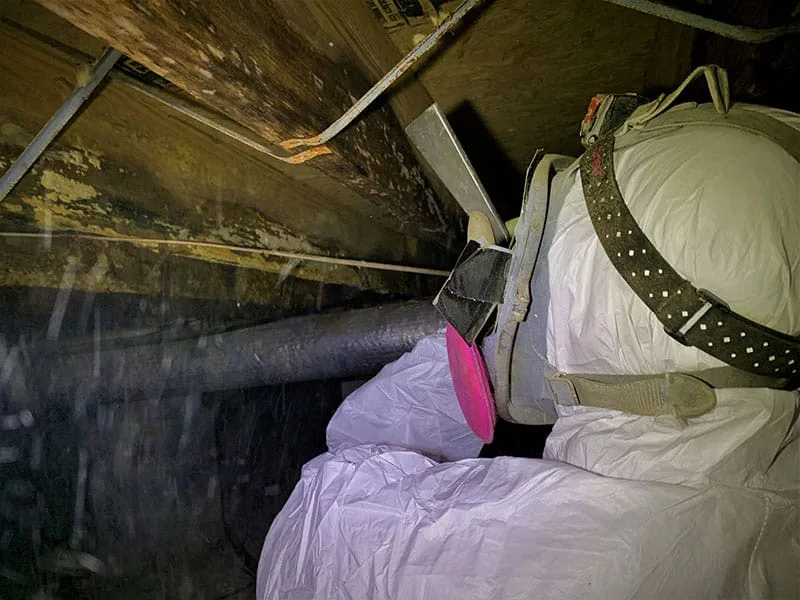
Soda Blasting creates dust and removes material from the wood, so we don’t crawl underneath and immediately pull the trigger. The work area needs to be prepared first. Depending on the project, that can involve containment, air management, and isolating the crawl space from the living area while we’re working.
We also plan how we’re going to reach the affected surfaces. Around established Wilmington neighborhoods near Market Street and Carolina Place, we can encounter older framing sharing a tight crawl space with newer plumbing, wiring, and ductwork. We have to get ourselves and the blasting hose through all of that before we ever reach the first joist we’re there to clean.
Then Comes the Messy Part
Once we’re suited up and the work area is ready, the blasting hose comes underneath with us. Sodium bicarbonate travels through the equipment and hits the affected wood with enough abrasive action to remove mold from the surface without using a harsher blasting material.
From down there, it’s very much a hands-on process. We work across one accessible section, reposition ourselves, pull more hose through, and move to the next. If a plumbing line crosses overhead or a duct takes away our easiest working angle, we crawl around it and approach the wood differently.
On a muggy Wilmington morning, we’re also paying attention to the environment we’re working in. Coastal humidity doesn’t automatically explain why mold developed beneath a particular house, but if the crawl space feels damp or we find other moisture evidence, that’s something we need to account for after the blasting is finished.
Joists Aren’t the Only Surfaces We’re Looking At
Floor joists are usually right in front of us when we crawl underneath, but mold isn’t obligated to stay on the easiest wood to reach. Accessible portions of the subfloor and other framing can also be involved, which means Soda Blasting may require us to work overhead and around some awkward obstacles.
Depending on the affected area and confirmed remediation plan, we may be working around:
- Floor joists: Cleaning accessible affected surfaces along the framing.
- Subfloor: Blasting overhead where mold is present and the surface can be reached.
- Framing intersections: Repositioning the nozzle to reach tighter accessible areas.
- Plumbing and wiring: Working carefully around utilities crossing the work area.
- Ductwork: Changing our position when HVAC components limit access to the wood.
A house around Greenfield Lake and Burnett Boulevard may give us a completely different crawl-space layout from one farther toward Masonboro. The service stays focused on removing mold, but how we physically reach those surfaces changes from house to house.
Some Joist Bays Take Longer Than Others
There’s rarely a straight shot from the crawl-space door to every affected surface. One section may give us plenty of room to work, while the next puts us underneath a duct with pipes crossing directly above our shoulder. We may have to pull more hose around a pier, flatten ourselves underneath an obstruction, and attack the next section from another angle.
That’s part of why Soda Blasting is a professional remediation service rather than simply spraying something over visible mold. We’re physically removing growth from the accessible wood and working our way through the affected area. It takes equipment, containment, and somebody underneath the house controlling where that blasting media goes.
Where Does All That Soda Go?
Once the affected surfaces have been blasted, there’s another part of the service homeowners don’t always think about: cleanup. The mold has been removed from the wood, but the crawl space now contains spent sodium bicarbonate and debris created during the blasting process.
We work back through the accessible area and clean up after the blasting. That also gives us a better opportunity to review the wood once the heavier work and airborne dust have settled. Instead of treating cleanup like an afterthought, it’s part of finishing the remediation area properly.
Before we’re done, we’re looking back over the areas we’ve worked on, checking accessible corners and framing intersections, and making sure the blasting portion of the service is complete.
Clean Wood Doesn’t Fix a Damp Crawl Space
Soda Blasting handles the mold that’s already on the accessible surfaces. It doesn’t automatically correct the conditions that allowed mold to develop in the first place.
That’s an important distinction in Wilmington. Living near the coast means humidity and frequent rainfall are familiar parts of the local environment, but we still inspect the individual crawl space instead of assuming every house has the same moisture problem. We may find elevated humidity, exposed ground, water intrusion, or another condition that needs separate attention.
Depending on what the inspection shows and the services appropriate for the property, moisture-control options may include:
- Vapor barriers: Helping reduce moisture entering the crawl space from exposed soil.
- Encapsulation: Creating a more controlled crawl-space environment.
- Dehumidification: Managing elevated humidity after mold remediation.
- Related water management: Addressing documented water intrusion when an appropriate service is available.
Those aren’t automatic additions to every Soda Blasting job. The Wilmington location specifically identifies dehumidification and vapor barriers among its post-removal moisture-control approaches, and the service plan should match what is actually happening underneath the house.
Soda Blasting Can Be One Part of the Project
Sometimes mold removal is the immediate reason we’re there, but Soda Blasting ends up being one phase of a larger crawl-space project. Mold may need to be removed before moisture-control work is completed, or humidity management may need to follow remediation so the crawl space isn’t left under the same conditions.
This is where the order of the work matters. We don’t want to cover affected surfaces with new materials before accounting for the mold that’s already there. We remove the mold first, clean the work area, and then move into the moisture-control portion of the project when it’s part of the confirmed plan.
Whether we’re underneath a house near Sunset Park and Carolina Beach Road, around Greenfield Lake, or farther east toward College Road, we’re making those decisions based on the crawl space in front of us. Local conditions matter, but the actual evidence underneath the house determines which services belong on the job.
Soda Blasting Services in Wilmington, NC
Soda Blasting is hands-on crawl-space mold removal. We prepare the work area, bring blasting equipment underneath the house, use sodium bicarbonate to physically clean accessible affected wood, work around utilities and tight spaces, clean up the spent material, and evaluate whether moisture-control services are also appropriate.
If you’ve found mold on joists, subfloor, or other accessible wood beneath your Wilmington home, contact Crawl Space Ninja online to schedule an inspection. We’ll determine whether Soda Blasting fits the conditions underneath your house and exp


Why Choose Our Services?
Crawl Space Ninja Eliminates the Guesswork.

Every decision we make on your job starts with one question: what's actually best for your home and your family.

We stand behind every job with our lifetime warranty, because giving you lasting protection and confidence in your investment.

Our technicians are trained and certified on the system we built and refined ourselves, not a one-size-fits-all fix.

From your first call to the final walkthrough, you’ll stay updated through every step of the process.

Consult, customize, commence. Every job starts with a plan built for your home, not a generic fix.

You'll know the full cost before work begins. No hidden fees, no surprises.