Crawl Space Repair in Columbia, SC: What We Find Beneath Your Home
The dry dirt beside a crawl-space access doesn’t tell us what’s happening twenty feet away. Beneath a Columbia home, we may start with plenty of room and insulation tucked neatly overhead, then crawl into a section where fiberglass hangs across our path, old plastic stops halfway across the soil, or staining appears along one foundation wall. Sometimes the crawl space changes before we ever reach the opposite side of the house.
That’s why Crawl Space Ninja gets beyond what’s visible from the doorway. If you’ve noticed musty odors, damp soil, fallen insulation, standing water, or visible growth beneath your Columbia home, contact us online to schedule a crawl space inspection.

Getting Underneath Columbia Homes
A crawl beneath a Shandon bungalow can put us underneath a house that has been standing through generations of plumbing, HVAC, insulation, and renovation work. Around Cottontown and Earlewood, we’re also dealing with established neighborhoods where homes have had plenty of time to change since their original construction.
Those changes are what interest us once we’re underneath. Newer plumbing may cross older framing. An addition may create a tighter section beyond the original foundation. A previous owner may have put down plastic that covers only part of the ground. Even houses separated by a few blocks can give us completely different working conditions.
Crawl Space Repair Means Going Farther Than the Doorway
Once we’re inside, we keep crawling. The first section may look fine while conditions change farther beneath the house. A few things can make us slow down:
- Damp soil: One section is noticeably wetter than the ground we crossed to reach it.
- Hanging fiberglass: Insulation begins brushing against our shoulders or has fallen completely.
- Foundation staining: Marks appear along one wall but not the others.
- Old repairs: Plumbing, ductwork, or framing changes show where previous work occurred.
- Partial ground coverage: An old vapor barrier ends while exposed soil continues.
- Visible growth: Wood or other materials need a closer inspection.
Beneath an established Earlewood home, an addition or later renovation can change the crawl quickly. We may move from comfortable working room into a much tighter section or encounter newer materials where the original house ends. Crawl Space Repair means seeing those differences before deciding what needs attention.
Encapsulation Replaces Patchwork Moisture Control
An old sheet of plastic can tell us someone thought about moisture before we arrived. The problem is that sometimes the plastic is torn, displaced, or simply stops while the crawl space keeps going.
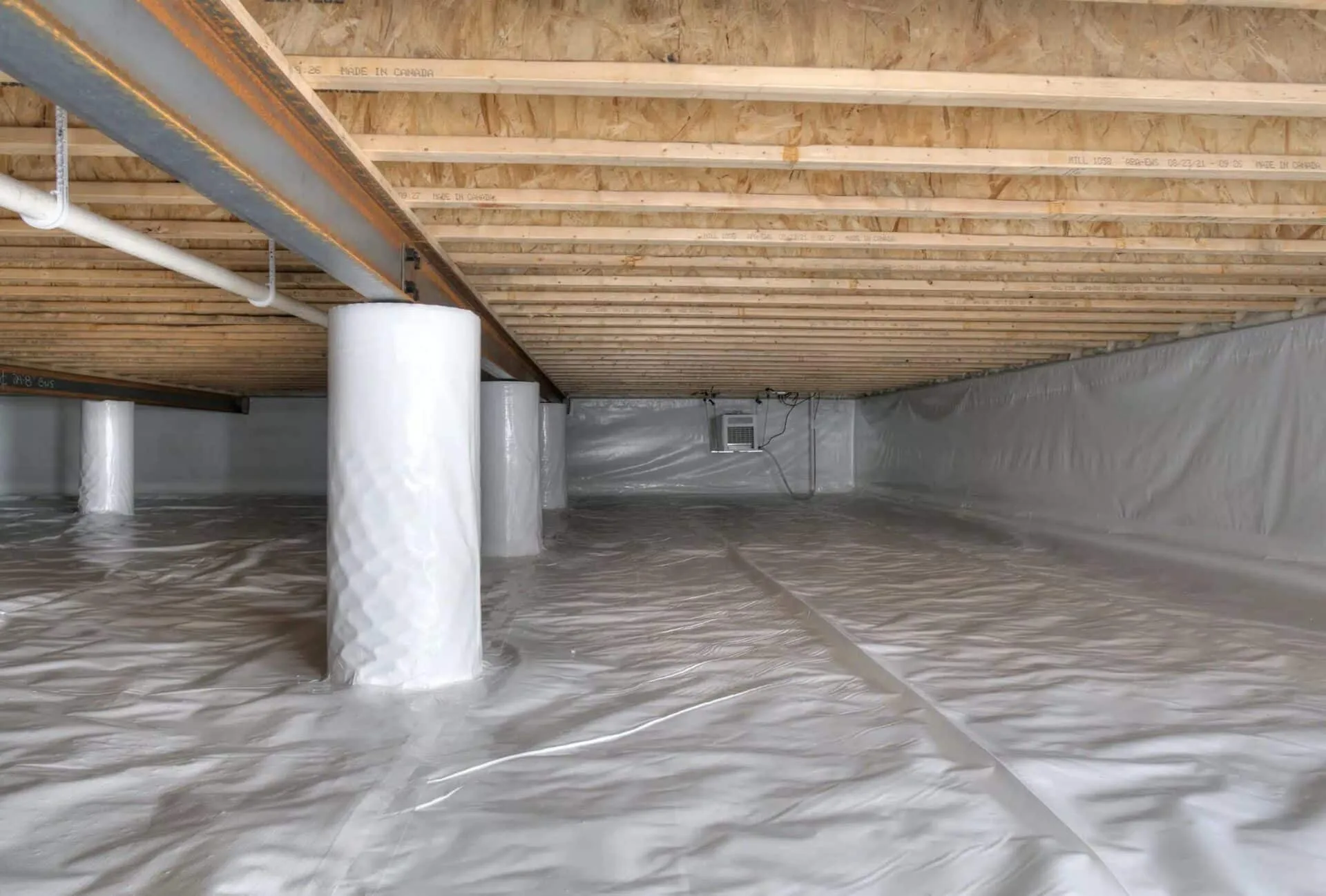
Crawl Space Encapsulation takes a more complete approach to separating the area beneath the home from exposed ground and uncontrolled outside air. Crawl Space Humidity Control can then help manage moisture within that environment.
A system may include:
- Ground vapor barrier
- Air sealing
- Dehumidification when needed
- A Vent Fan where appropriate
Columbia moisture problems don’t always involve water deep enough to make a puddle. We may instead find exposed soil, heavy-feeling air, clammy fiberglass, or wood that doesn’t seem to completely dry. Beneath an older Shandon home near Devine Street or toward Rosewood Drive, we’re also working around whatever mechanical and renovation changes have occurred over the years. The moisture-control system has to make sense for the space that’s there now.
Crawl Space Insulation Shouldn’t Be Something We Crawl Through
Sometimes fiberglass tells us there’s a problem by getting in our way. It hangs low enough that we have to push beneath it, or we find sections lying on the soil farther into the crawl.
Crawl Space Insulation that’s damp, stained, compressed, or falling deserves more than being pushed back between the joists. We look at what’s happening immediately around it. Is the soil damp underneath? Is staining concentrated nearby? Does the insulation change where an addition begins?
That can make the far end of an older Columbia crawl space just as important as the entrance. The material above us can change as the house changes, particularly where plumbing, HVAC, or renovations have disturbed what was originally installed.
Crawl Space Waterproofing Follows What the Water Left Behind
The puddle may be gone by inspection day. Mud, staining, and debris often aren’t. Instead of looking only for standing water, we follow what it left behind:
- Mud against a pier: Evidence that water reached an area even if it’s dry today.
- A line on masonry: Staining can show where moisture has been present.
- Darker soil: One section may stay wetter than the surrounding ground.
- Collected debris: Material pushed into a low spot can show where water traveled.
- A damp foundation wall: Moisture concentrated along one side gives us somewhere to investigate.
Then we step outside and look at that portion of the property.
That’s useful in established neighborhoods such as Shandon, where deep residential lots stretch through the area between Devine Street and Rosewood Drive. Landscaping, additions, and drainage around an individual property can change over time. Crawl Space Waterproofing is about figuring out how water is reaching that particular crawl space and addressing the route it follows.
Mold Removal Requires Seeing the Wood First
Mold can be easy to miss when fiberglass, plumbing, and ductwork are between us and the framing. A flashlight from the access won’t show what’s hidden farther underneath.
Crawl Space Mold Removal addresses affected areas once they’re accessible. Soda Blasting may be appropriate for cleaning contaminated wood surfaces, but clean wood isn’t the only thing we’re after. We also need to address the moisture conditions around it.
That’s where crawling the entire space pays off. A dry section near the entrance doesn’t cancel out damp framing beneath another part of the house. Once we’ve moved past the insulation, utilities, and tight spots, we can see more of what the crawl space has been hiding.
Contact Crawl Space Ninja in Columbia, SC
A dry patch of soil beside the crawl-space door doesn’t tell you what’s happening beneath the kitchen, an addition, or the opposite foundation wall. One piece of fallen insulation doesn’t explain why the space smells musty, either.
From older homes around Shandon and Cottontown to established properties in Earlewood and elsewhere in Columbia, what’s underneath can change considerably before we reach the other side.
If you’ve found damp soil, hanging insulation, standing water, visible growth, or other signs of trouble, contact Crawl Space Ninja online to schedule a crawl space inspection in Columbia. We’ll get underneath the house, keep going beyond the easy-to-see areas, and determine what needs attention.


Why Choose Our Services?
Crawl Space Ninja Eliminates the Guesswork.

Every decision we make on your job starts with one question: what's actually best for your home and your family.

We stand behind every job with our lifetime warranty, because giving you lasting protection and confidence in your investment.

Our technicians are trained and certified on the system we built and refined ourselves, not a one-size-fits-all fix.

From your first call to the final walkthrough, you’ll stay updated through every step of the process.

Consult, customize, commence. Every job starts with a plan built for your home, not a generic fix.

You'll know the full cost before work begins. No hidden fees, no surprises.
Find Your Closest Crawl Space Ninja!