Bowing Basement Walls
Bowing basement walls are a serious issue that can threaten the structural integrity of your home. Identifying the signs early is crucial for timely intervention.

Signs of Bowing Walls
- Horizontal or stair-step cracks
- Diagonal cracks, especially in corners
- Inward bowing or bulging of walls
- Walls sliding inward at the bottom or top
- Gaps in mortar joints
- Soil intrusion into the basement
- Cracks in concrete
What Causes Bowing Walls?
The primary culprit behind bowing walls is hydrostatic and soil pressure. This pressure can cause walls to bow, crack, and, in severe cases, shear. Shearing happens when the bottom part of the wall, particularly in block constructions, breaks free and moves inward. This issue is more prevalent in homes with tall foundation walls and those built with hollow blocks without rebar reinforcement.
Bowing Basement Wall Solutions
Carbon Fiber Repair: Carbon fiber is an excellent solution for stabilizing bowing walls. It’s stronger than steel and, when installed correctly, prevents walls from worsening. However, it’s important to understand that carbon fiber does not straighten walls but rather reinforces them to resist further bowing.
Steel I-Beams: Installing steel I-beams can provide additional support, especially where the load is unevenly distributed. This method is effective but might not address the entire affected area.
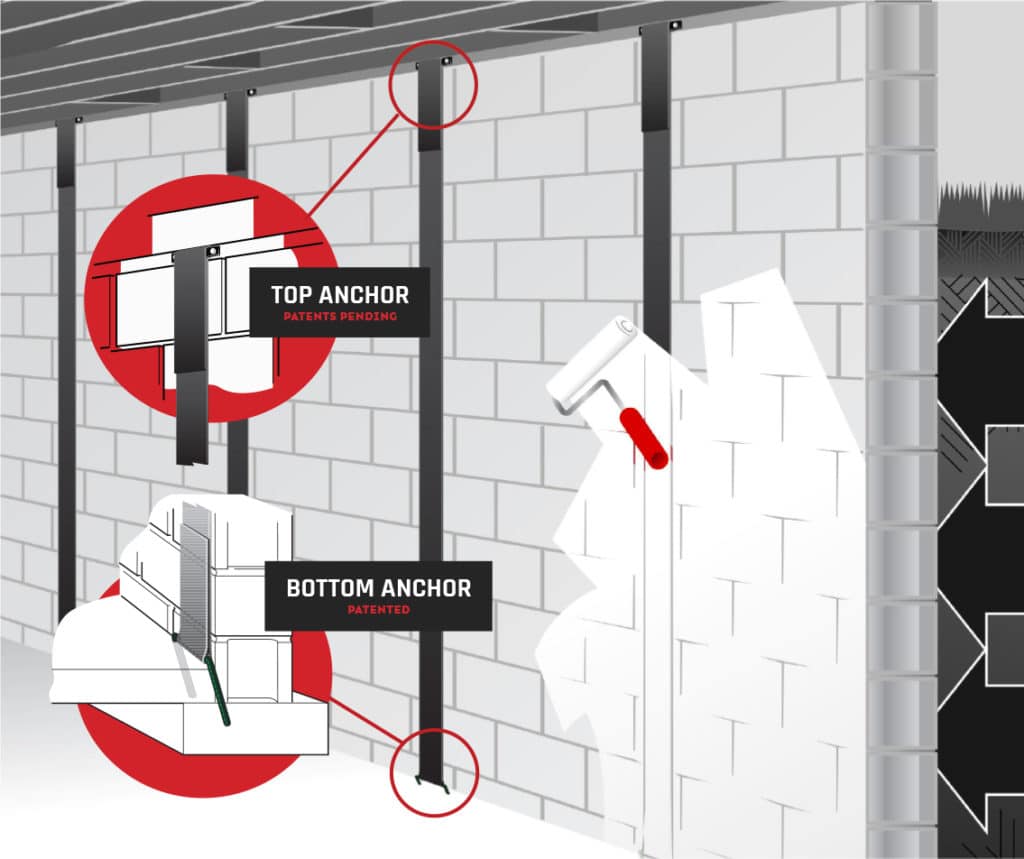
Fortress Stabilization System: For comprehensive repair, the Fortress Stabilization System, or the DIY-friendly Carbon Guard System, is recommended. These systems provide anchors at both the top and bottom of the wall, addressing shearing and tipping issues more effectively.
Prevention + Waterproofing
Addressing the root cause, typically hydrostatic pressure, is key. This can involve installing curtain drains, redirecting downspouts, and interior basement waterproofing to reduce pressure on the walls. Waterproofing paints, sump pumps, and French drains are also vital in managing basement moisture, thus preventing the conditions that lead to bowing and shearing.
In addition to wall reinforcement, repairing cracks in basements, garages, pools, and sidewalks with carbon fiber solutions is essential. These repairs can prevent the progression to more severe problems like shearing.
For comprehensive solutions to bowed walls, shearing, and foundation issues, Crawl Space Ninja offers specialized services. Contact us for a thorough assessment and to implement the necessary repairs and waterproofing solutions for your basement or crawl space.
Bowing Wall Solutions
For comprehensive solutions to bowed walls, shearing, and foundation issues, Crawl Space Ninja offers specialized services. Contact us for a thorough assessment and to implement the necessary repairs and waterproofing solutions for your basement or crawl space.


Why Choose Our Services?
Crawl Space Ninja Eliminates the Guesswork.

Every decision we make on your job starts with one question: what's actually best for your home and your family.

We stand behind every job with our lifetime warranty, because giving you lasting protection and confidence in your investment.

Our technicians are trained and certified on the system we built and refined ourselves, not a one-size-fits-all fix.

From your first call to the final walkthrough, you’ll stay updated through every step of the process.

Consult, customize, commence. Every job starts with a plan built for your home, not a generic fix.

You'll know the full cost before work begins. No hidden fees, no surprises.
Find Your Closest Crawl Space Ninja!