Charlotte Drainage Solutions for Soggy Yards and Unwanted Water
A strong Charlotte thunderstorm can tell you a lot about your yard in. Water starts following the driveway edge, pine straw washes out of the bed beside the house, and the backyard develops a puddle. Two days later, the puddle may be gone, but that strip beside the fence is still too soft to mow. Those are different clues, and they can point to different drainage problems.
We see plenty of variation from one Charlotte property to another. An established yard off Providence Road or in Myers Park may have mature trees, landscaping, walks, and driveways affecting where water can go. Around Steele Creek, neighboring grades in a newer development may play a larger role. Head toward Plaza Midwood or East Charlotte and tighter lots can limit the available drainage routes. Crawl Space Ninja provides yard drainage, French drain pipe, sump pumps, and downspout extensions designed around those individual conditions. Contact us online to schedule a drainage evaluation.

We Start With What You See After It Rains
You don’t need to know whether you need a French drain, sump pump, or another drainage solution before calling us. What helps more is knowing what happens during and after a storm. Water running between houses, pine straw washing out below a downspout, or a backyard staying soft for several days gives us useful clues about where to start.
Those clues can mean different things across Charlotte. A tight Plaza Midwood lot may have limited space for moving roof runoff, while a larger property around Steele Creek may collect water coming across a longer grade. We look at the roof, lawn, hard surfaces, low spots, and surrounding elevations before deciding which drainage solution fits the property.
Yard Drainage for Water Crossing the Lawn
Some yards show us the problem while it’s happening. You can watch water follow the edge of the driveway, come around the corner of the house, or move down the backyard before collecting at the lowest point. Afterward, flattened grass, washed soil, and debris can show us the same route even when the water is gone.
These are the kinds of clues that tell us to start looking at surface drainage:
- Water returning to the same low spot after storms
- Runoff traveling toward the house
- Soil washing out beside a driveway or landscape bed
- Water crossing patios and walkways
- Lower sections of lawn receiving runoff from higher ground
Charlotte’s rolling Piedmont terrain means elevation can change enough within one property to matter. From older properties off Park Road to residential streets between Providence Road and Carmel Road, driveways, patios, landscaping, and neighboring yards can interrupt the route water would naturally take. Around SouthPark and Quail Hollow, a backyard may also sit noticeably above or below the street even when the property doesn’t look particularly steep from the front.
We walk beyond the puddle and follow the grade. If water is arriving from halfway across the property, putting drainage only at the final wet spot may miss an opportunity to control it earlier.
Downspout Extensions for the Problem Right Under the Gutter
If you’re constantly raking pine straw back into the same bed after a storm, look at the downspout above it. Your gutter system concentrates rain from a large section of roof and releases it through a relatively small outlet. When that happens a few feet from the foundation, roof runoff can become one of the biggest water sources in that part of the yard.
Roof runoff gets our attention when we find:
- Pine straw or mulch pushed away from the gutter outlet
- Soil washing out at one corner of the house
- Soft ground directly below a downspout
- Gutter water crossing a sidewalk or driveway
- Several roof sections draining toward the same area
Finding somewhere better for that water can take some planning. In Plaza Midwood or along established streets near Central Avenue and The Plaza, a neighboring property, driveway, walkway, or landscaping may sit exactly where we’d otherwise want to run an extension. Around Myers Park and Dilworth, mature landscaping and established outdoor spaces can create another set of obstacles.
The endpoint matters as much as the extension itself. Sending roof runoff another fifteen feet doesn’t solve anything if the grade turns around and brings it back toward the house.
Sump Pumps When the Elevations Don’t Cooperate
Sometimes we know exactly how to collect the water, but the property doesn’t give us anywhere lower to send it. The backyard may sit below the street, or a rise in the lawn may stand between the wet area and the available discharge point. Buried drainage pipe still depends on gravity unless something provides the lift.
A pump starts making sense when the elevations leave us with situations like these:
- A low backyard without a downhill outlet
- Water trapped between surrounding grades
- Drainage pipe sitting below the available discharge location
- A French drain that collects water but can’t release it naturally
- A drainage system that needs mechanical help completing the route
You can encounter those conditions around South Charlotte without living on anything that looks like a major hill. From Park Road toward Quail Hollow and the McAlpine Creek area, rolling ground can create meaningful differences between the street, front yard, and backyard. Properties farther west toward Steele Creek can have their own front-to-back or side-to-side elevation changes.
We check the route before recommending mechanical equipment. If gravity gives us a reliable way out, we use it. When the low point really is lower than the available exit, a sump pump gives us another option.
French Drain Pipe for Charlotte Ground That Stays Soft
Then there’s the drainage problem you don’t necessarily see while it’s raining. Sunday afternoon brings a storm. By Tuesday, most of the lawn looks fine, but your mower still leaves tracks along one side of the house. That’s when we start thinking less about water crossing the surface and more about what’s happening in the soil.
Charlotte sits in North Carolina’s Piedmont, where clay-rich subsoils are common. Anyone who has dug around some Charlotte yards has probably encountered that familiar red or reddish clay. Soil conditions vary from property to property, but where clay-rich ground becomes saturated, moisture may behave differently than it does in loose, fast-draining soil.
When we hear about ground that refuses to dry, these are some of the conditions we’re checking for:
- Side yards that remain saturated between storms
- Wet ground at the bottom of a grade
- Subsurface water moving toward the house
- Soft areas that linger after the rest of the lawn dries
- Moisture problems that surface drainage doesn’t fully address
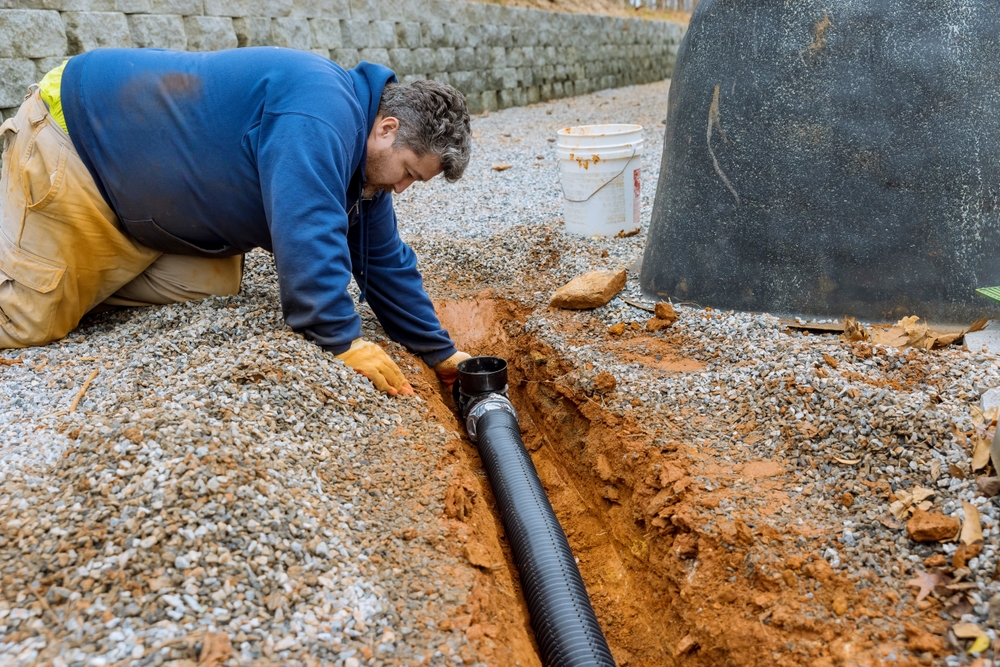
A French drain uses perforated pipe and drainage material to intercept water below the surface and provide a route toward an appropriate outlet. Placement depends on where that wet ground begins and how the property slopes.
A yard near Sharon Amity Road and Briar Creek can give us a different layout from one off Selwyn Avenue or Park Road. Up around University City and the Mallard Creek area, rolling ground creates another set of drainage patterns. We don’t assume the wettest patch is automatically where the French drain should start. We look for the route the subsurface water is taking and position the system where it can actually intercept it.
Drainage That Fits the Way Your Charlotte Yard Behaves
Maybe it’s the strip beside the driveway that never dries. Maybe you can’t mow the backyard until Thursday after a Sunday storm. You might be tired of putting pine straw back beneath the same downspout or watching water come around the house every time a summer thunderstorm settles over Charlotte.
Those problems tell us more than a neighborhood name ever could. We combine what you’re seeing with what we find in the grade, roof runoff, soil conditions, low areas, and available discharge routes. The answer may be yard drainage, downspout extensions, a sump pump, French drain pipe, or more than one component working together.
Crawl Space Ninja provides drainage solutions for homeowners throughout Charlotte, from established properties around Myers Park and Dilworth to Plaza Midwood, SouthPark, University City, Steele Creek, and the neighborhoods stretching through South Charlotte. Contact us online to schedule a drainage evaluation and let us take a look at why water keeps giving you trouble around your property.


Why Choose Our Services?
Crawl Space Ninja Eliminates the Guesswork.

Every decision we make on your job starts with one question: what's actually best for your home and your family.

We stand behind every job with our lifetime warranty, because giving you lasting protection and confidence in your investment.

Our technicians are trained and certified on the system we built and refined ourselves, not a one-size-fits-all fix.

From your first call to the final walkthrough, you’ll stay updated through every step of the process.

Consult, customize, commence. Every job starts with a plan built for your home, not a generic fix.

You'll know the full cost before work begins. No hidden fees, no surprises.
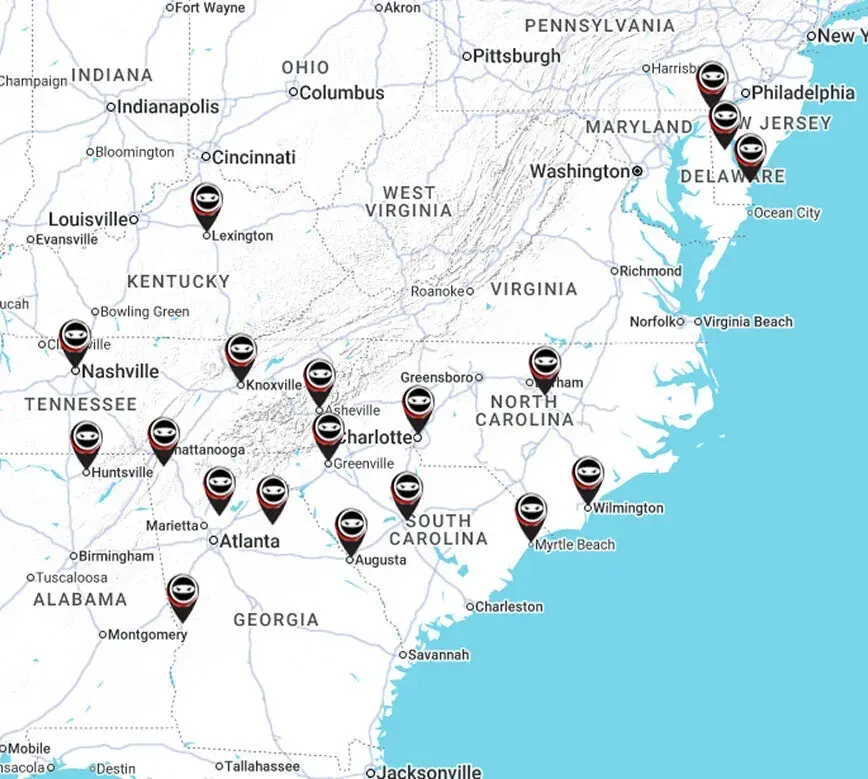
Find Your Closest Crawl Space Ninja!