Drainage Services for Columbia Yards That Stay Wet After the Rain
When we’re trying to figure out a drainage problem, one of the most useful questions you can answer is, “What happens here when it rains?” You may tell us water pours across the driveway, the backyard gets soft enough that the dog tracks mud inside, or the flower bed beneath one downspout washes out every time a storm moves through Maury County. Those details help because the puddle left behind doesn’t always tell us how the water got there.
That’s especially true around Columbia. An established property near West 7th Street gives us a different layout from a larger lot along Hampshire Pike. Head toward Bear Creek Pike, Santa Fe Pike, or the rolling ground outside the center of town and elevation can become a bigger part of the drainage pattern. Crawl Space Ninja provides downspout extensions, yard drainage, sump pumps, and French drain pipe based on what’s happening on your property. Contact us online to schedule a drainage evaluation.
One Wet Area Can Tell Us Several Different Stories
This is why two Columbia homeowners can show us what looks like the same muddy backyard and end up needing different solutions. At one house, a downspout may be dumping roof runoff directly into the low area. At another, water may be crossing the property from higher ground. Somewhere else, the surface looks fine during the storm but remains saturated because water is moving through the soil.
Sometimes several of those things happen together. A sloped lot toward Bear Creek Pike might send surface runoff toward the house while a nearby downspout adds roof water to the same area. If the ground also stays saturated and the low point sits below the available outlet, the drainage plan may involve more than one service.
We don’t want to install more drainage than the property needs. We want to identify each source and address the ones actually creating the problem.
Sometimes the Problem Starts at the Gutter
Before we blame the yard, we take a look at the roof drainage. Your gutters collect rain from the entire roof and concentrate that water into a few downspouts. When an outlet ends right beside the house, one small section of ground can receive a surprising amount of water during a Tennessee storm.
The downspouts deserve a closer look when you’re seeing:
- Mulch scattered out of beds after it rains
- Small washouts underneath gutter outlets
- Soft soil around one corner of the house
- Roof water running across a walkway
- Several gutter outlets feeding the same area
Where we extend that water depends on the property. Closer to downtown Columbia, particularly around West 7th Street and the neighborhoods surrounding the historic district, houses, driveways, walks, and neighboring lots can limit our options. Downtown developed along the south side of the Duck River, and the street pattern becomes considerably different from properties farther from the city center.
Travel southwest along Hampshire Pike or away from town on Santa Fe Pike and you may have more open ground available. That doesn’t mean we can simply point the extension toward the yard and call it finished. On a rolling lot, we need to see whether the discharge will continue away or turn around and follow the grade right back toward another part of the house.
Yard Drainage for Water You Can Watch Move
Some drainage problems aren’t subtle. Stand at the window during a heavy rain and you can watch exactly what happens. Water may run along the edge of the driveway, cross the backyard, or pour down from higher ground before collecting in one low section.
That’s the kind of information we use when laying out yard drainage. Surface drainage may be appropriate when you have:
- Water repeatedly collecting in the same low area
- Runoff moving downhill toward the house
- Soil washing out along driveways or walks
- Water crossing patios and outdoor living areas
- Lawn sections receiving runoff from higher ground
Columbia’s rolling terrain means we don’t design that system from the wet spot alone. Around Trotwood Avenue, properties can change elevation as you move south and west from downtown. Farther east toward Bear Creek Pike and the I-65 side of Maury County, the layout becomes different again. Columbia’s comprehensive planning identifies rolling hills as a defining part of the local landscape and the Duck River as the area’s primary drainage feature.
The river itself gives you a good picture of how much the terrain changes locally. Riverwalk Park sits along the Duck River close to downtown, while the landscape rises as you move away from the river corridor. We see the same thing on a much smaller scale in residential yards. Water moves toward the lowest available route, so we want to understand the whole grade before deciding where to intercept it.
When the Water Has Nowhere Downhill to Go
Here’s a situation that can be frustrating. We know where the water collects. We know we can capture it. The problem is that the best place to discharge it sits higher than the wet area. Buried drainage pipe won’t make water run uphill.
That’s when we start considering whether a sump pump belongs in the plan. Conditions that can make a pump useful include:
- A backyard sitting lower than the front of the property
- Water collecting in a depression surrounded by higher ground
- A drainage line ending below the available outlet
- A low side yard without a gravity route
- Collected water that needs mechanical help reaching its discharge point
This doesn’t require an extreme hillside. Columbia’s rolling ground can create meaningful elevation changes even when a property looks fairly ordinary from the street. A home off Trotwood Avenue might have a backyard lower than the driveway. On a larger property toward Hampshire Pike, the low point could sit well away from the road with another rise between it and a usable outlet.
That’s why we check elevations instead of assuming a pump is necessary. If gravity gives us a practical route, that’s usually the simpler answer. A sump pump becomes valuable when the property doesn’t provide one.
French Drain Pipe for the Ground That Refuses to Dry
Other homeowners describe a completely different problem. They don’t see water rushing across the yard. They just know that one section stays wet.
Maybe your mower leaves ruts there. Your shoes sink into the grass several days after a storm. The side yard feels soft even though the front lawn has already dried. Those clues can point toward water moving below the surface.
French drain pipe can be useful for:
- Saturated side yards
- Soft ground below a slope
- Subsurface water moving toward the house
- Low areas that remain wet between storms
- Moisture problems that surface drainage doesn’t address
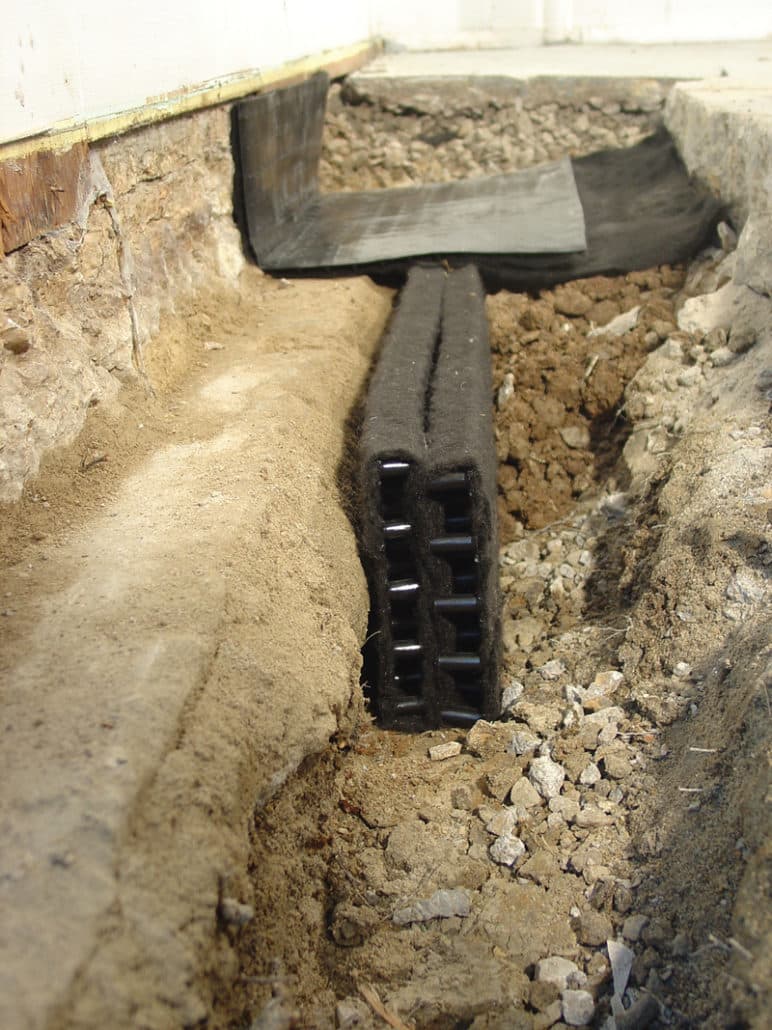
A French drain uses perforated pipe and drainage material to collect water moving through the soil and provide a route toward an appropriate outlet. We don’t automatically put that pipe through the center of the wettest patch. We look at the surrounding grade to determine where the water is coming from and where we can intercept it.
That becomes important around Columbia because the landscape continues changing beyond the developed center of town. Head northeast toward Bear Creek Pike, south along Pulaski Highway, or west toward Hampshire and the surrounding countryside, and properties can include longer grades and more open ground. East of Columbia, the Yanahli Wildlife Management Area along the Duck River includes bluffs, cedar glades, caves, and karst features, showing just how varied the terrain around this part of Maury County can become.
Your yard may be nowhere near that dramatic, but the principle matters. Groundwater and subsurface drainage follow the conditions underneath the property, so we need to understand those conditions before deciding where the French drain belongs.
A Drainage Plan That Fits Your Part of Columbia
There isn’t one typical Columbia yard. Properties near the Duck River and historic downtown don’t have the same layouts as homes farther down Trotwood Avenue. Lots toward Hampshire Pike, Santa Fe Pike, Bear Creek Pike, and Pulaski Highway introduce different combinations of open ground, neighboring grades, driveways, landscaping, and elevation.
That’s why Crawl Space Ninja starts by walking the property. We look at the roof, watch for runoff routes, find the low points, check saturated areas, and determine whether gravity gives collected water somewhere useful to go. From there, we can determine whether you need downspout extensions, yard drainage, a sump pump, French drain pipe, or a combination of those solutions.
If you’re dealing with a yard that stays muddy, water washing through landscaping, saturated ground beside the house, or runoff that keeps returning after a hard Columbia rain, contact us online to schedule a drainage evaluation.


Why Choose Our Services?
Crawl Space Ninja Eliminates the Guesswork.

Every decision we make on your job starts with one question: what's actually best for your home and your family.

We stand behind every job with our lifetime warranty, because giving you lasting protection and confidence in your investment.

Our technicians are trained and certified on the system we built and refined ourselves, not a one-size-fits-all fix.

From your first call to the final walkthrough, you’ll stay updated through every step of the process.

Consult, customize, commence. Every job starts with a plan built for your home, not a generic fix.

You'll know the full cost before work begins. No hidden fees, no surprises.
Find Your Closest Crawl Space Ninja!