Concrete Leveling in Knoxville, TN
A sinking concrete slab usually means the soil beneath it has shifted, washed away, or lost the density needed to support the weight above. Crawl Space Ninja specializes in concrete leveling in Knoxville, TN, using polyurethane foam injection to raise settled slabs, fill underground voids, and restore support without unnecessary demolition. Our free inspections help property owners understand why their concrete is moving and determine if the existing surface can be stabilized and lifted.
Uneven driveways, sunken sidewalks, and sloping patios can create trip hazards, drainage problems, and additional stress on adjoining concrete. These conditions often become more noticeable after heavy rainfall or prolonged changes in soil moisture. We evaluate the slab, surrounding grade, and visible settlement patterns before recommending the appropriate lifting method.
Call us at (888) 541-1998 or schedule a concrete leveling inspection online to have your Knoxville property evaluated.
Sinking Concrete in Knoxville Often Starts With the Supporting Soil
Concrete slabs depend on stable, properly compacted ground to maintain their position. When soil consolidates, erodes, or changes volume with moisture fluctuations, sections of concrete can lose support and settle unevenly. The resulting movement may produce gaps between slabs, raised joints, or low areas where rainwater collects.
We identify conditions that contribute to settlement before determining the appropriate repair. Polyurethane foam injection can restore elevation and improve support beneath structurally suitable concrete. This approach can preserve existing surfaces, reduce disruption to landscaping and adjacent structures, and correct uneven transitions without removing an otherwise serviceable slab.
How Polyurethane Foam Lifts Settled Concrete
Traditional concrete replacement requires demolition, debris removal, preparation, and installation of a new slab. Polyurethane concrete leveling, also called polyjacking, takes a different approach by working beneath the existing concrete. Expanding foam fills available voids and generates controlled lifting pressure, allowing suitable slabs to return closer to their intended elevation.
Our technicians follow a measured process designed around the existing concrete and the conditions beneath it.
- Settlement inspection: We examine slab displacement, cracking, joint separation, and visible deterioration to determine if lifting is appropriate.
- Elevation assessment: We identify settled sections and establish the adjustments needed to restore usable surface transitions.
- Drainage evaluation: We consider runoff patterns, surface slopes, and evidence of erosion contributing to lost soil support.
- Injection preparation: We create small access holes at selected locations to reach the unsupported areas beneath the slab.
- Polyurethane foam injection: We inject expanding foam to fill voids and gradually raise the concrete.
- Final alignment check: We monitor the finished elevation, close injection points, and review conditions that could contribute to additional movement.
Polyurethane foam cures quickly, and many treated concrete surfaces can return to use much sooner than newly poured concrete. Actual access and loading restrictions depend on the installation conditions and the specific repair.
Concrete Leveling Services for Knoxville Driveways, Patios & Walkways
Concrete settlement affects different surfaces in different ways. Driveways experience repeated vehicle loading, walkways require safe transitions between sections, and patios must maintain suitable drainage slopes. A slab’s thickness, condition, supporting soil, and intended use all influence the lifting process.
Our concrete leveling services address a variety of settled residential surfaces and qualifying slab applications.
- Driveway concrete leveling: We raise sunken driveway panels to improve vehicle access, joint alignment, and transitions near garage entrances.
- Sidewalk leveling: We correct displaced sidewalk sections and uneven joints that create potential tripping hazards.
- Walkway leveling: We restore sunken walking surfaces around entrances, side yards, and other pedestrian areas.
- Patio concrete leveling: We lift settled patio sections to improve surface alignment and address slopes affected by settlement.
- Porch concrete leveling: We evaluate and raise suitable porch slabs that have dropped below adjoining steps or entry surfaces.
- Pool deck leveling: We correct uneven poolside concrete panels and improve transitions around walking areas.
- Basement floor leveling: We assess settled interior concrete sections and determine if polyurethane injection can restore suitable support.
- Concrete slab stabilization: We fill accessible voids beneath qualifying concrete slabs to improve underlying support and reduce unsupported areas.
Concrete must remain in suitable condition for controlled lifting. When extensive cracking, crumbling, or structural deterioration prevents an effective repair, we explain why leveling may not be appropriate and discuss the need for further evaluation.
What Knoxville Property Owners Should Know About Concrete Settlement
Why is my driveway sinking where it meets the garage?
Settlement near garage entrances often develops when backfilled soil around the foundation compresses over time. Inadequate compaction and water infiltration can contribute to the movement. We evaluate the driveway’s elevation and the conditions around the garage before recommending polyurethane lifting.
Can concrete leveling repair a sidewalk with multiple cracks?
Cracked concrete may still qualify for leveling if the individual sections remain sufficiently intact for controlled lifting. Polyurethane restores support beneath the slab but does not automatically close or eliminate existing cracks. We assess their severity and location before determining if leveling is practical.
Is polyurethane leveling different from mudjacking on Knoxville soils?
Both methods lift settled concrete, but they work differently. Mudjacking pumps a heavy cement-based slurry beneath the slab, which adds weight to soil that may already be soft or eroded. Polyurethane foam is much lighter and uses smaller injection holes, so it places less load on the ground below. We evaluate the slab and soil conditions before recommending a lifting method.
Can polyurethane foam stop rainwater from draining toward my foundation?
Raising settled concrete may help restore a more favorable surface slope when displacement has caused water to flow toward the house. Additional grading or drainage improvements may be necessary if the surrounding property continues directing runoff toward the foundation. We evaluate these conditions during the inspection.
How long does polyurethane concrete leveling last?
Polyurethane foam is designed to maintain support beneath the treated slab, but long-term results also depend on underlying soil conditions, continued erosion, drainage, and the concrete’s structural condition. We assess contributing factors and recommend appropriate drainage corrections when needed to reduce the likelihood of recurring settlement.
Concrete Repairs Guided by Clear Findings and Customer-First Decisions
One advantage of polyurethane leveling is the ability to preserve existing concrete when its condition supports restoration. Our approach emphasizes explaining the findings before recommending a repair, including the expected lifting results and any limitations associated with the slab. We follow a customer-first process that prioritizes appropriate corrective work instead of automatically recommending demolition.
We offer straightforward pricing before approved work begins, giving homeowners a clear understanding of the proposed repair. For larger leveling projects, eligible customers can explore our financing options. We also offer a 100% satisfaction guarantee, with applicable coverage and project terms discussed during the consultation. Backed by more than 1,000 five-star reviews, Crawl Space Ninja stands behind its work with lifetime warranty coverage on qualifying projects.
Addressing Concrete Settlement Across Knoxville and East Tennessee
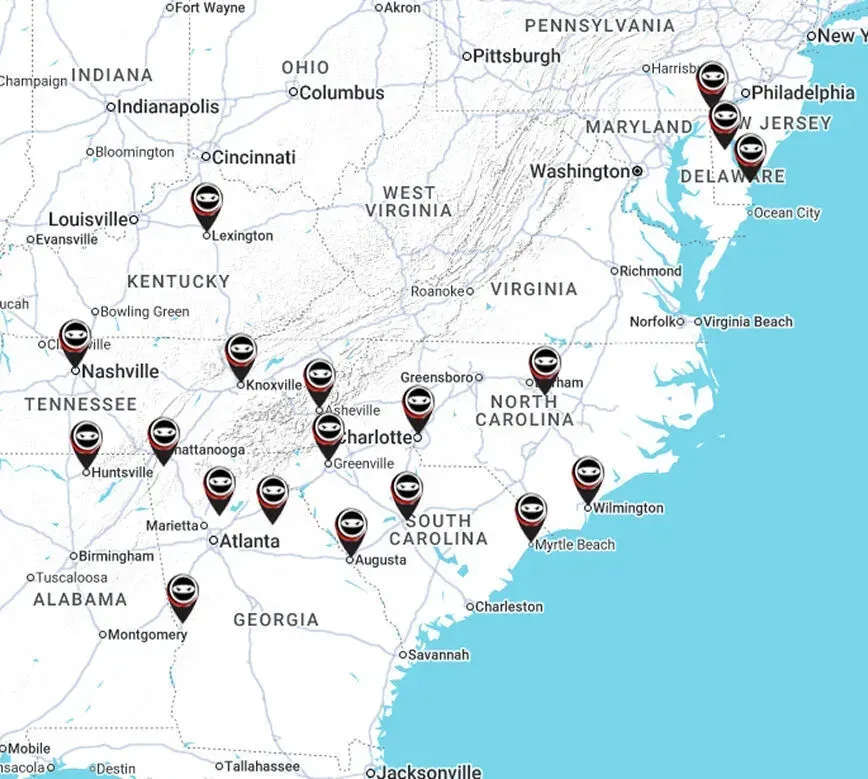
We serve homeowners throughout Knoxville, including Bearden, South Knoxville, West Knoxville, and Holston Hills, as well as surrounding communities such as Maryville, Oak Ridge, and Sevierville. East Tennessee’s ridge-and-valley terrain creates varying grades and drainage conditions that can influence concrete settlement. Properties on sloped lots may experience soil erosion beneath driveways and walkways, while areas with poorly compacted fill can develop uneven surfaces as the soil consolidates.
Older Knoxville neighborhoods such as Old North Knoxville, Island Home, and Sequoyah Hills may have concrete exposed to decades of ground movement and changing drainage patterns. Newer developments can experience settlement around recently disturbed soil, especially near foundations and utility trenches. We evaluate the property’s actual soil support, runoff conditions, and slab construction rather than assuming every sinking surface has the same cause.
Restore Your Concrete Before Settlement Creates Bigger Problems
Uneven concrete can become more difficult to use as displacement increases, particularly when raised joints create hazards or settled surfaces direct water toward nearby structures. Crawl Space Ninja helps Knoxville homeowners evaluate sinking slabs and determine if polyurethane concrete leveling can restore their elevation and support. Our inspection identifies the extent of settlement, considers the conditions contributing to movement, and establishes a suitable repair plan.
Contact us at (888) 541-1998 or request your concrete leveling assessment online to discuss lifting and stabilizing the settled concrete around your Knoxville property.


Why Choose Our Services?
Crawl Space Ninja Eliminates the Guesswork.

Every decision we make on your job starts with one question: what's actually best for your home and your family.

We stand behind every job with our lifetime warranty, because giving you lasting protection and confidence in your investment.

Our technicians are trained and certified on the system we built and refined ourselves, not a one-size-fits-all fix.

From your first call to the final walkthrough, you’ll stay updated through every step of the process.

Consult, customize, commence. Every job starts with a plan built for your home, not a generic fix.

You'll know the full cost before work begins. No hidden fees, no surprises.
Find Your Closest Crawl Space Ninja!