Basement Insulation in Lafayette, GA
Uninsulated basement walls and leaking rim joists can allow substantial heat loss, create cold surfaces, and contribute to condensation that damages surrounding materials. Crawl Space Ninja specializes in basement insulation in Lafayette, GA, evaluating foundation construction, air leakage, and moisture conditions before recommending the appropriate insulation system. Backed by more than 1,000 five-star reviews, our approach combines moisture-resistant materials with targeted air sealing to help homeowners improve thermal performance without overlooking the conditions that can compromise an installation.
A basement that feels cold in winter or excessively humid in summer may have more than an insulation deficiency. Foundation walls, exposed framing, and utility penetrations can all contribute to uncomfortable temperatures. We identify where heat transfer and air leakage occur, then determine how insulation can work alongside existing moisture-control measures.
Call us at (888) 541-1998 or schedule a free basement insulation inspection online to have your Lafayette home evaluated.

Basement Wall Insulation That Addresses Lafayette’s Temperature and Moisture Challenges
Basement insulation affects the thermal performance of the entire home, not just the rooms below ground. Uninsulated foundation walls transfer heat between the basement and surrounding soil, while gaps around the rim joists allow outside air to enter. These conditions can contribute to uncomfortable floors, temperature differences between rooms, and additional heating and cooling demands.
Crawl Space Ninja evaluates how the basement functions within the home’s thermal envelope. Properly installed foundation wall insulation can reduce heat transfer, improve basement comfort, and help limit condensation on interior surfaces. When paired with effective air sealing, these improvements also reduce uncontrolled airflow through foundation and framing openings.
How We Evaluate Basement Walls Before Insulation Installation
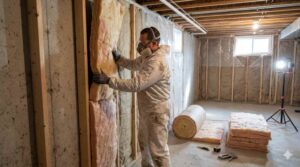
Insulating a damp foundation without understanding the source of moisture can create additional problems. Water may enter through cracks, move through porous masonry, or accumulate where exterior drainage is inadequate. Insulation can conceal these conditions if the foundation is not evaluated first.
Our inspection process considers the basement’s construction, moisture exposure, and existing thermal barriers before installation begins.
- Foundation wall assessment: We examine accessible concrete, block, stone, or brick surfaces for damage, irregularities, and visible moisture conditions.
- Moisture investigation: We check for dampness, staining, condensation, and signs of water intrusion that may require correction.
- Thermal boundary evaluation: We identify uninsulated surfaces, existing insulation deficiencies, and areas contributing to heat loss.
- Rim joist inspection: We evaluate perimeter framing and penetrations for openings that allow unwanted air movement.
- Insulation selection: We determine appropriate material types, coverage, and installation methods based on the basement’s construction.
- Installation review: We check insulation continuity, air sealing, and applicable protection requirements after the recommended work is completed.
Our Ninja Way approach emphasizes evaluating the property before developing an installation plan. If we identify active water intrusion, we explain why moisture correction may be necessary before basement insulation proceeds.
Basement Insulation Services in Lafayette, GA
Basement insulation methods vary according to foundation construction, wall conditions, and moisture exposure. Smooth poured-concrete walls may accommodate rigid foam board, while irregular stone or masonry surfaces can require a different installation approach. Rim joists also need attention because insulation alone does not necessarily stop air moving through gaps around framing.
Our basement insulation services include materials and installation methods selected for these different conditions.
- Basement wall insulation: We insulate suitable foundation walls to reduce heat transfer and improve temperature consistency throughout the basement.
- Rigid foam board insulation: We install moisture-resistant foam board on appropriate foundation surfaces to establish a continuous thermal barrier.
- Closed-cell spray foam insulation: We use suitable spray foam applications to insulate and seal irregular foundation surfaces where the material meets project requirements.
- Rim joist air sealing: We seal accessible gaps around perimeter framing using GreenGuard Gold Certified spray foam to reduce unwanted air infiltration.
- Foundation air sealing: We address accessible cracks, joints, and utility penetrations that contribute to uncontrolled airflow.
- Moisture-resistant insulation upgrades: We recommend suitable materials for basement environments where conventional insulation may be vulnerable to moisture exposure.
- Uneven masonry wall insulation: We develop insulation approaches for qualifying stone, brick, and irregular basement walls where standard rigid panels may leave gaps.
- Existing insulation improvements: We evaluate deteriorated or ineffective basement insulation and recommend appropriate corrections or replacement.
Our recommendations also account for required fire protection, insulation coverage, and the condition of existing materials. We explain the purpose of each improvement so homeowners understand how the finished insulation system is intended to perform.
What Lafayette Homeowners Should Know About Basement Insulation
Should basement insulation go directly against concrete foundation walls?
Certain rigid foam and spray foam products are designed for appropriate foundation wall applications, but installation details matter. The wall must be evaluated for active moisture intrusion, material compatibility, and applicable building requirements. We determine suitable insulation placement based on the basement’s construction and condition.
Is it better to insulate basement walls or the basement ceiling?
It depends on whether the basement is part of the home’s conditioned space. When the basement is finished or heated and cooled, insulating the foundation walls and sealing the rim joists is usually the better approach. When it is an unconditioned space, insulation in the ceiling between the floor joists may make more sense. We evaluate how the basement is used before recommending where the thermal boundary belongs.
Can insulating my basement walls make the upstairs floors warmer?
Yes. Insulating basement walls can reduce heat loss through the foundation, particularly when the basement is included within the home’s conditioned space. Rim joist air sealing can also help reduce drafts near the floor perimeter. The improvement depends on existing insulation, air leakage, and HVAC conditions.
Why does fiberglass insulation develop mold or moisture damage in basements?
Fiberglass itself does not serve as a food source for mold, but moisture trapped around insulation can support growth on dust, paper facings, and nearby building materials. Damp insulation can also lose effectiveness. We investigate moisture conditions before recommending replacement materials.
Is spray foam suitable for older Lafayette homes with stone basement walls?
Spray foam can conform to irregular masonry surfaces, but older stone walls require careful evaluation. Moisture movement, mortar condition, and the wall’s ability to dry influence material selection. We assess these conditions before determining if spray foam is appropriate.
Can basement insulation stop condensation on foundation walls?
Insulation can reduce condensation risk by separating humid indoor air from colder foundation surfaces when installed with appropriate air sealing. It cannot correct every moisture problem. Active seepage, plumbing leaks, and excessive indoor humidity may require separate corrective measures.
Low-Emission Air Sealing Materials and Better Installation Control
The materials used around occupied homes matter, particularly when spray foam is applied near basement framing and air pathways. We use GreenGuard Gold Certified spray foam for appropriate rim joist and air-sealing applications. This certification addresses chemical emissions, while proper application, curing, and ventilation remain important parts of the installation process.
We also explain insulation recommendations, project requirements, and straightforward pricing before work begins. Homeowners planning larger basement improvements can explore our financing options, subject to approval and applicable terms. Our basement insulation work is backed by a limited lifetime warranty, subject to the applicable terms of the project.
Insulating Basements Across Lafayette and North Georgia
We serve homeowners in Lafayette, Dalton, Rome, and Chattanooga, TN, addressing basement insulation needs throughout North Georgia and the surrounding Tennessee Valley. The region’s humid summers, seasonal rainfall, and hillside lots near Pigeon Mountain and Lookout Mountain create conditions that can influence foundation moisture and basement temperatures. Below-grade masonry walls may remain cooler than indoor air during humid weather, increasing condensation risk when insulation and air sealing are inadequate.
Older homes in Lafayette and surrounding communities may have unfinished basements with exposed masonry, irregular stone walls, or limited insulation around perimeter framing. More recent construction can experience drafts and thermal losses where insulation coverage or air sealing is incomplete. We evaluate these building characteristics before recommending materials and installation methods.
Improve Basement Comfort Without Overlooking the Foundation
A basement insulation project should correct more than the coldest wall or most noticeable draft. Crawl Space Ninja helps Lafayette homeowners identify thermal weaknesses, evaluate moisture conditions, and install insulation systems suited to their foundations. Our free inspections establish which surfaces need attention, which materials fit the construction, and which underlying problems should be addressed before installation.
Contact us at (888) 541-1998 or request your basement insulation evaluation online to discuss insulation and air-sealing improvements for your Lafayette home.


Why Choose Our Services?
Crawl Space Ninja Eliminates the Guesswork.

Every decision we make on your job starts with one question: what's actually best for your home and your family.

We stand behind every job with our lifetime warranty, because giving you lasting protection and confidence in your investment.

Our technicians are trained and certified on the system we built and refined ourselves, not a one-size-fits-all fix.

From your first call to the final walkthrough, you’ll stay updated through every step of the process.

Consult, customize, commence. Every job starts with a plan built for your home, not a generic fix.

You'll know the full cost before work begins. No hidden fees, no surprises.
Find Your Closest Crawl Space Ninja!