Dangers of High Humidity in Your Home
Summer brings sunshine, longer days – and a significant increase in humid air. While you might expect moisture to be a concern only during rainy months or in tropical climates, excess humidity can quietly damage your home from the inside out, especially in your basement and crawl space.
If left unchecked, high humidity creates the ideal conditions for mold growth, structural decay, and poor indoor air quality. That’s why controlling humidity is essential for maintaining a safe, healthy, efficient, and comfortable home.
How Humidity Affects Your Home
Humidity is more than an outdoor annoyance. Indoors, high moisture levels can impact your home’s structural integrity and energy efficiency. When the air in your house holds too much moisture – especially in hidden or poorly ventilated areas like crawl spaces or basements – it creates a chain reaction of problems.
- Wood absorbs moisture, causing warping, rotting, or weakening of floor joists, beams, and subflooring
- Metal components corrode, including fasteners, pipes, and HVAC ductwork
- Insulation loses effectiveness, leading to higher energy bills
- Mold and mildew thrive, particularly on organic materials like drywall, wood, and insulation
- Allergens and dust mites increase, aggravating respiratory issues like asthma and allergies
Humidity doesn’t stay below your home, either. Warm air rises due to the stack effect, drawing air and moisture into your living areas. That’s why moisture problems can affect your entire indoor environment.
Warning Signs of High Indoor Humidity
While crawl spaces and basements are naturally more humid, too much moisture can lead to visible and noticeable issues:
- Musty odors that linger even after thorough cleaning
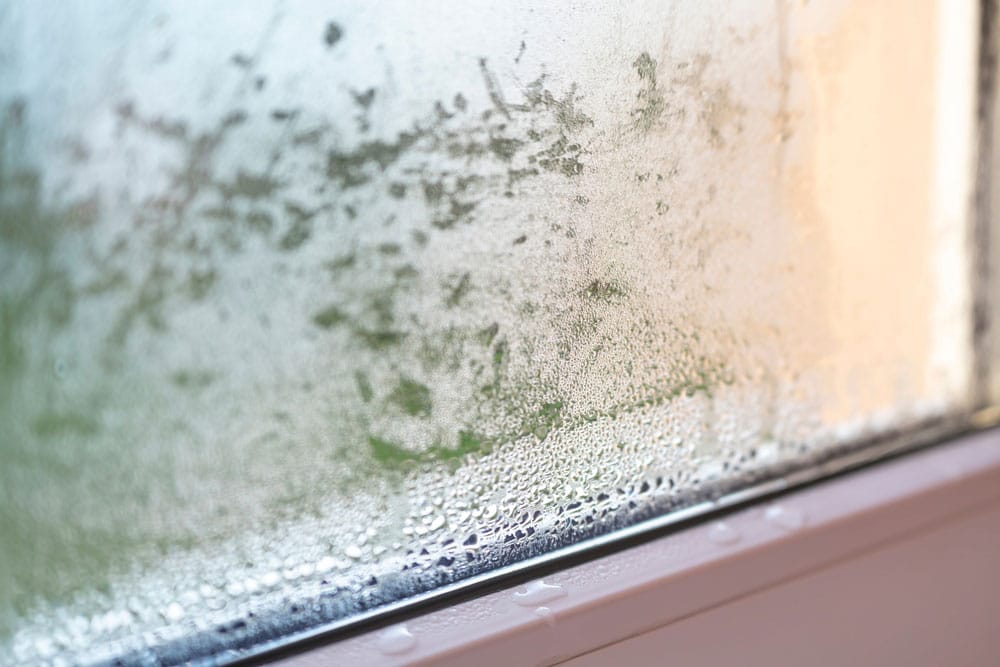
- Condensation on windows or HVAC ducts
- Mold spots on your walls, ceilings, or insulation
- Warped wood floors or bubbling paint
- Allergy symptoms that worsen indoors
Your home’s humidity levels may be out of balance if you notice any of these red flags.