Misconception: Don’t Remove Insulation During Mold Remediation
Not removing the sub-floor insulation during mold treatment comes up on just about every crawl space inspection. The concept of doing less to save money has always been around, but we feel there are some areas of crawl space repair you should make sure are completed properly.
Not doing mold remediation properly just to save money today will cost you in the future. Improper mold remediation could have an effect on your home and your health.
Sub-floor Insulation Traps Moisture
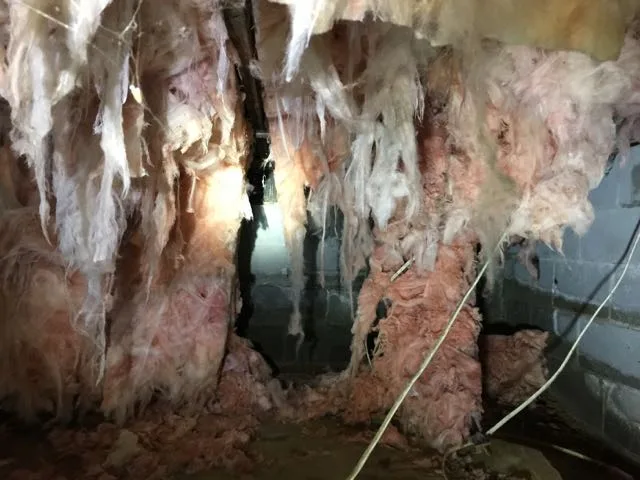
Part of the reason the sub-floor of your crawl space is growing mold is because of high humidity and perhaps a water leak from above. But, sub-floor insulation is also great at absorbing and trapping moisture. The reason I mention this is even if the water leak is fixed and the humidity is lowered, wet insulation can continue to stay wet.
What is Kraft Paper
Most sub-floor insulation has a paper backing. This type of insulation is called kraft batt insulation. The paper is said to be a waterproof barrier, but the waterproof barrier is not that effective at waterproofing. Floods from toilets can get trapped between the sub-floor and the waterproof barrier. Humidity can travel via the joist, bypass the waterproof barrier, and transfer to the sub-floor. However, once the moisture is trapped between the kraft paper and the sub-floor it becomes a great waterproof barrier.
Types of Crawl Space Insulation
The insulation material can also trap and hold moisture. These materials could be rockwool, fiberglass, or cellulose. I have even seen sub-floor insulation made of recycled blue jeans. The material usually dries once the humidity is lowered, but, according to the manufacturers, it becomes compromised. Compromised insulation loses its R-value and should be replaced. Another way insulation is compromised is by critters nesting in it. The amount of urine and feces deposited on the insulation creates odors and lowers R-value.
Our Crawl Space Mold Removal Process
Most Crawl Space Ninja customers decide to choose the worry-free crawl space option which includes mold remediation. This is done by removing sub-floor insulation and then removing the mold with our environmentally friendly and green soda blasting process. Our soda blasting process steps are proprietary to give you the best experience possible.
Protecting Wood from Mold
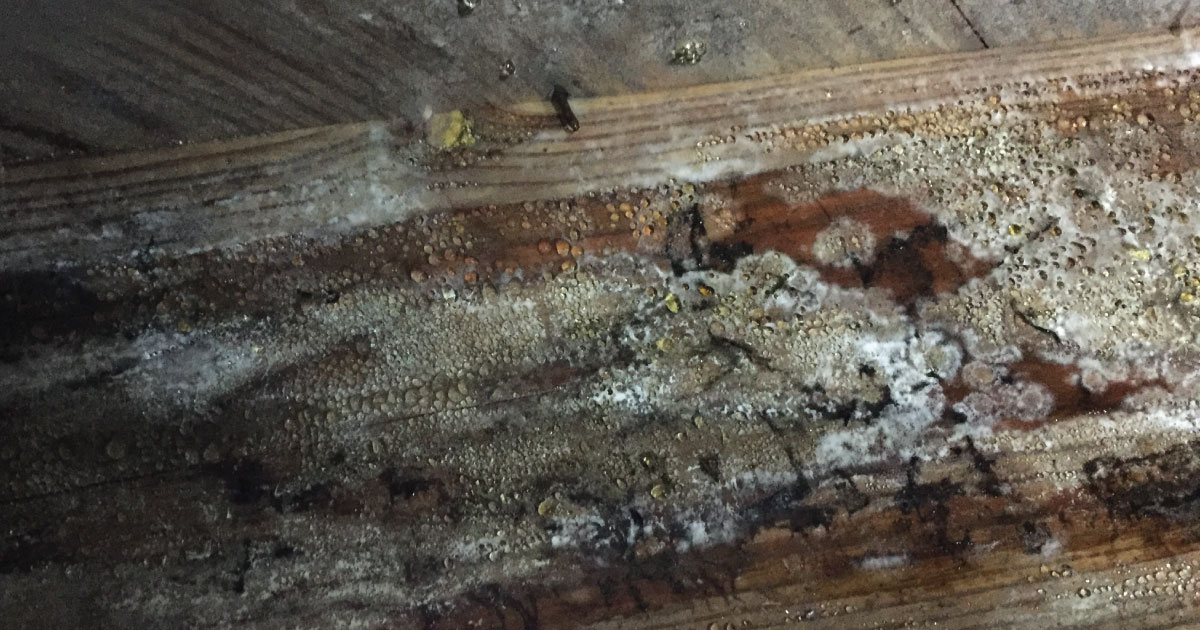
Removing the surface mold is not the last step in the mold remediation process. Next we apply an environmentally friendly and green peroxide mold treatment product. The last step is applying our green and environmentally friendly wood penetrant. Anabec X-70 uses silver nano-technology to prevent mold growth and moisture intrusion of the crawl space sub-floor. All of this is done while keeping the moisture in check with a crawl space dehumidifier. We have a unique process for mold cleaning and are able to offer a mold warranty from 10-years to limited lifetime with our Gold and Platinum Packages. This warranty is also 100% transferrable if you sell your home.
Not Removing Sub-Floor Insulation
Due to sub-floor insulation trapping moisture and mold, we see no reason to keep it in place. Yes, you may save a few bucks today, but at what expense in the future? Many of the crawl spaces we have redone over the years are in worse shape than before the repair. This not only caused more damage to the crawl space but an increase in pricing makes it more expensive to complete it correctly versus doing it right the first time. Don’t trust your home and your indoor air quality to contractors that skip this vital step of crawl space encapsulation.
What Next? Contact us Today
Contact us if you need help fixing your crawl space or yard drainage by clicking here.
Learn about Crawl Space Ninja Franchise opportunities.