
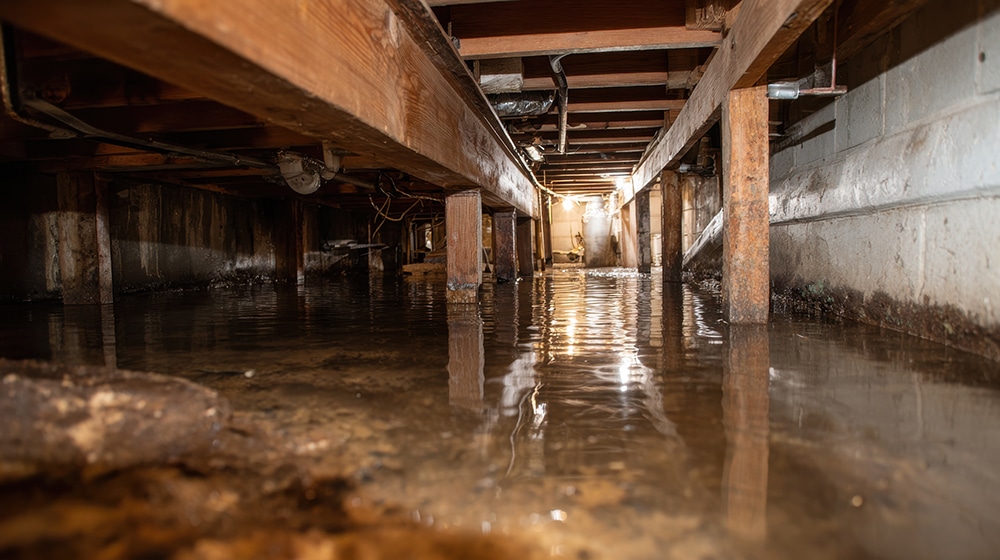
When homeowners discover moisture in their crawl space, their first instinct is often to try a quick fix. A thin plastic sheet from the hardware store, a box fan for airflow, or a spray bottle of bleach may seem like an easy and affordable solution. Unfortunately, these measures rarely address the root cause of the problem.
Damp or flooded crawl spaces typically result from underlying issues involving drainage, groundwater pressure, humidity, or ventilation. Temporary DIY fixes mask symptoms, while allowing the damage to continue unchecked below the surface.
Understanding why these fall short can help you avoid the frustration of wasting time and money on ineffective repairs.
Why Crawl Space Moisture Happens
Moisture doesn’t appear in a crawl space by accident. It typically enters through pathways that include:
- Ground moisture evaporating upward from exposed soil
- Rainwater entering through insufficient drainage around the foundation
- Humid outdoor air flowing through open vents
- Plumbing leaks or condensation from ducts and pipes
- Saturated soil pressing water through foundation walls
Because crawl spaces sit directly above the ground, they are naturally vulnerable to humidity and water intrusion. Fixing the problem requires identifying the source and controlling it – not merely treating the visible effects.
The Trouble With Plastic Sheets
We often see homeowners attempt to mitigate crawl space moisture by putting a thin plastic sheet on the ground. While a homemade vapor barrier may initially appear to solve the problem, it rarely turns out the way you might expect.
Many store-bought plastic sheets:
- Are flimsy and tear easily
- Fail to seal tightly around walls and supports
- Allow moisture to collect underneath, thus defeating the purpose
- Break down over time in damp environments
Without proper installation and sealing, ground moisture will find another path into the crawl space. Professional encapsulation uses a thick, heavy-duty polyethylene layer and proprietary sealing techniques to prevent this issue.
Box Fans Don’t Solve Humidity
Another prevalent DIY approach is placing a box fan in the crawl space in an attempt to dry things out. While fans are good at circulating air, they cannot remove moisture from it. They may even worsen the problem by pulling humid outdoor air into the crawl space, where it condenses on cooler surfaces like ducts, pipes and wood framing.
Bleach and Mold Sprays Miss the Root Cause
Many homeowners use bleach or other chemical sprays when they see mold or mildew forming in their crawl spaces. While these products may briefly reduce the appearance of mold, they rarely eliminate it.
If you fail to address the underlying moisture problem, you’ll allow mold to continue proliferating regardless of how often you clean or which products you use.
Bleach treatments also fail to address:
- High humidity levels
- Water intrusion
- Wet insulation
- Poor ventilation
- Damp structural materials
The Hidden Cost of DIY Crawl Space Fixes
Temporary fixes can feel like progress, but they often delay the real solution. During that time, moisture will continue affecting your crawl space and the rest of your home.
Long-term consequences may include:
- Wood rot in floor joists and supports
- Increased risk of mold growth
- Pest infestations attracted by damp conditions
- Reduced insulation performance
- Higher heating and cooling costs
- Poor indoor air quality
Because much of the air inside your home can originate from the crawl space, moisture problems below can quickly become health and comfort problems above.
What Professional Crawl Space Solutions Do Differently
Professional crawl space services focus on solving the root causes of moisture rather than applying short-term patches. A thorough inspection from our team at Crawl Space Ninja may reveal hidden issues such as drainage problems, groundwater pressure, ventilation failures, or damaged insulation.
From there, long-term solutions may include:
- Crawl space encapsulation
- Heavy-duty vapor barriers
- Interior drainage improvements
- Dehumidification systems
- Mold remediation and soda blasting
- Structural repairs if moisture has caused damage
These work together to control humidity, block ground moisture, and keep your crawl space dry year-round.
Why Professional Inspections Matter
Many crawl space problems remain hidden until they become severe. Professional inspections allow trained technicians to spot issues that you may overlook.
During an inspection, our experts can identify:
- Subtle moisture sources
- Early signs of structural damage
- Insulation failures
- Drainage problems around the foundation
- Mold or air quality concerns
Stop Treating Symptoms – Fix the Source
DIY crawl space fixes may seem convenient, but they rarely deliver lasting results. Plastic sheets, fans, and chemical sprays might briefly hide the symptoms, but they do not address the underlying causes of moisture.
Call our experienced team at Crawl Space Ninja to schedule a comprehensive inspection and get reliable advice on ways to keep your crawl space clean, dry, and healthy for the long term.