5 Crawl Space Waterproofing Mistakes
Here are 5 crawl space waterproofing mistakes many contractors and homeowners make when correcting a flooded crawl space. The time, money, and effort it takes to repair a flooded crawl space is significant. Don’t waste these resources by making these crawl space waterproofing mistakes and having to redo the project.
Mistake #1 – No Sump Pump Basin
The sump pump basin is what houses and protects the sump pump. Properly installing a sump pump basin will keep your sump pump secure and clean for years. We recommend a perforated basin to allow groundwater to enter quickly. The faster the water enters the basin, the quicker it can be discharged from the crawl space.

Waterproofing Mistake #2 – No Sump Pump
The second mistake is trying to get the water out of the crawl space using a gravity-fed system. Many contractors will punch a hole in the foundation wall beneath the crawl space vapor barrier as a discharge point. This type of discharge can get bogged down when your crawl space takes on water after a heavy rain.
Keep in mind as your crawl space is flooding the groundwater is rising outside the crawl space. This can create competition for your gravity-fed system, especially if you are using a perforated pipe outside the crawl space. I have yet to see a contractor transition from a perforated to a solid discharge line at the foundation wall.
Add a crawl space sump pump every 140 linear feet on the interior of the crawl space. This will give the waterproofing system the power it needs to remove flood waters quickly from your crawl space.
No Vapor Barrier – Mistake #3
Not having a vapor barrier and not having a properly installed vapor barrier will affect the crawl space waterproofing system’s performance. We use a properly installed crawl space vapor barrier the same way a basement waterproofing company uses concrete. The encapsulated and sealed plastic keeps the water in a position for it to reach the crawl space waterproofing system.
Loose laid vapor barrier will shift when the crawl space floods. Once the water is on top of the plastic, the waterproofing system becomes useless to remove that water. Keeping all floodwaters under the crawl space vapor barrier will direct water to the sump pumps and interior drainage system.
Don’t Forget the Battery Back-up – Mistake #4
Not installing a sump pump battery back-up is the mistake made the most often. Most contractors do not discuss this option with homeowners and relay the importance of how the back-up system works. The most crucial time you will need power for the sump pump is during a storm that causes heavy flooding, wind damage, and power loss. Of course, if you have a whole home generator you will not need a sump pump battery back-up system. If you have a current waterproofing system, our battery back-up can be added to the sump pump at any time.
Ready to find out more?
Drop us a line today for a quote!
Mistake #5 – French Drain Install Fails
We recently did an assessment of a competitor’s crawl space waterproofing system and found they did not bury the drain tile in the ground. This happens frequently when cheap crawl space contractors are brought in to do waterproofing. We have seen the french drain pipe buried around the door of the crawl space, but as you go further back, the crew became lazy and just laid the pipe on the ground as seen here.
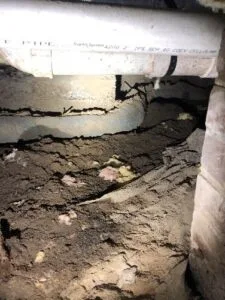
Make sure the interior waterproofing french drain tile is buried properly, allowing water to flow to the sump pump. The image above also shows no vapor barrier was installed as mentioned in mistake #3. Don’t settle for cheap products and unethical contractors to address your crawl space waterproofing needs.
Contact Crawl Space Ninja for Basement Waterproofing and Encapsulation
Please contact us to schedule your assessment to fix your crawl space, basement issue.
Do you need help with mold removal, crawl space encapsulation, crawl space insulation, vapor barrier, waterproofing, foundation repair, basement waterproofing, or controlling humidity in your crawl space?
If you live in Georgia, Delaware, North Carolina, South Carolina, Tennessee, or Kentucky, Crawl Space Ninja can help!
Also, let us know in the comments below if you have an idea for a new blog topic.
DIY Crawl Space Repair
Perhaps you’d like to tackle your own crawl space repair. Visit our DIY Store.
Join Crawl Space Ninja as an Owner
Learn about Crawl Space Ninja Franchise opportunities.